
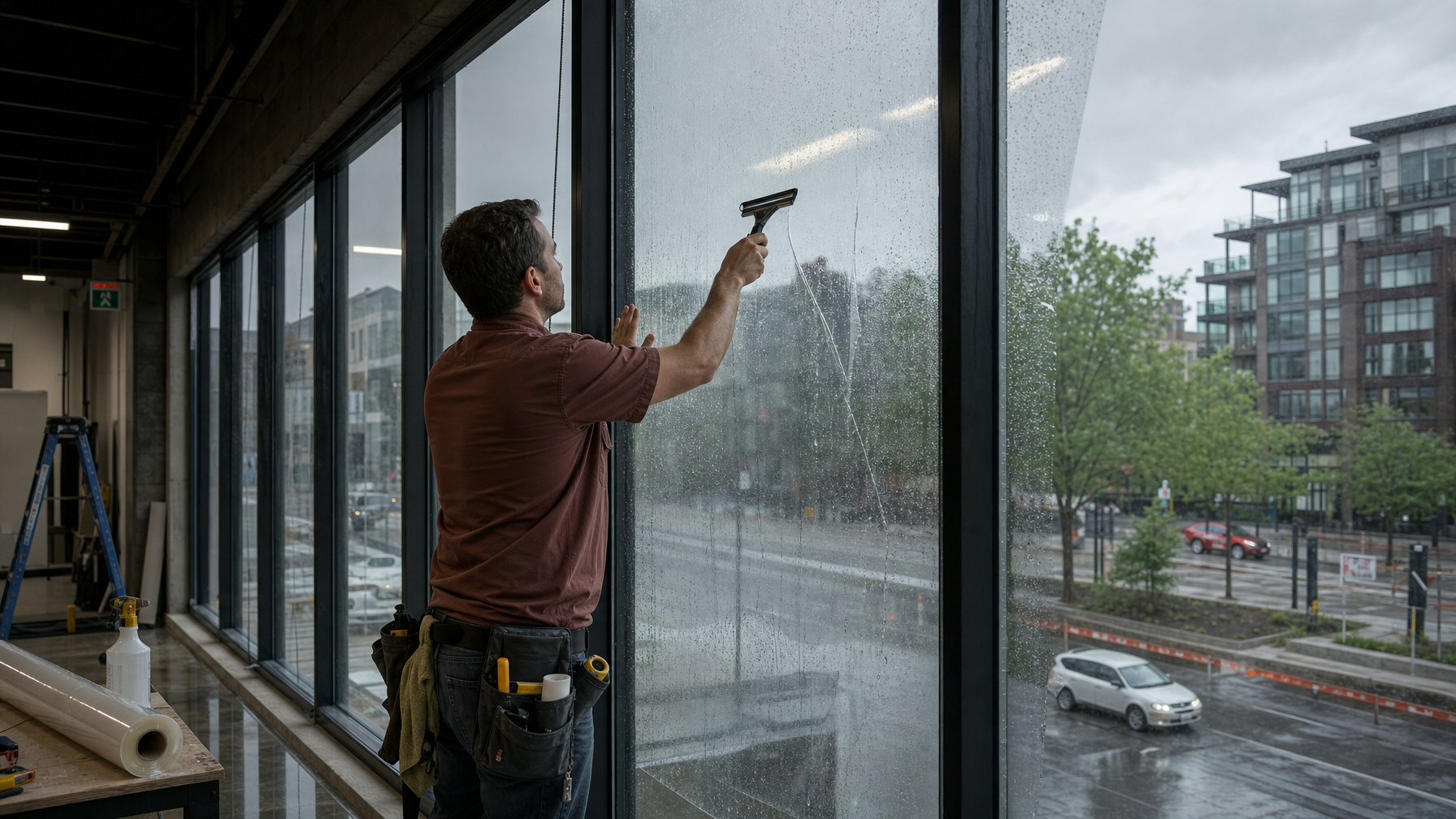
Safety film for windows is a multi-layer polyester film certified to ANSI Z97.1 or CPSC 16 CFR 1201 that holds broken glass fragments together after impact, preventing injury from accidental breakage and delaying forced entry through glazed openings. In BC, buildings subject to the BC Building Code require certified safety glazing in hazardous locations, certified safety film applied to existing glass satisfies this requirement at a fraction of the cost of glass replacement.
If you found this page searching for “safety film for windows,” you’re looking for exactly the same product that window film professionals call security film or fragment retention film. The terminology differs, manufacturers, inspectors, and installers use different names, but the core function is identical: a certified polyester film that transforms ordinary annealed or tempered glass into glazing that stays intact under impact.
This guide covers everything BC property owners need to know: what the certifications mean, where BC Building Code requires it, what it costs installed in Vancouver, and whether it can substitute for tempered glass replacement.
What Is Safety Film for Windows?
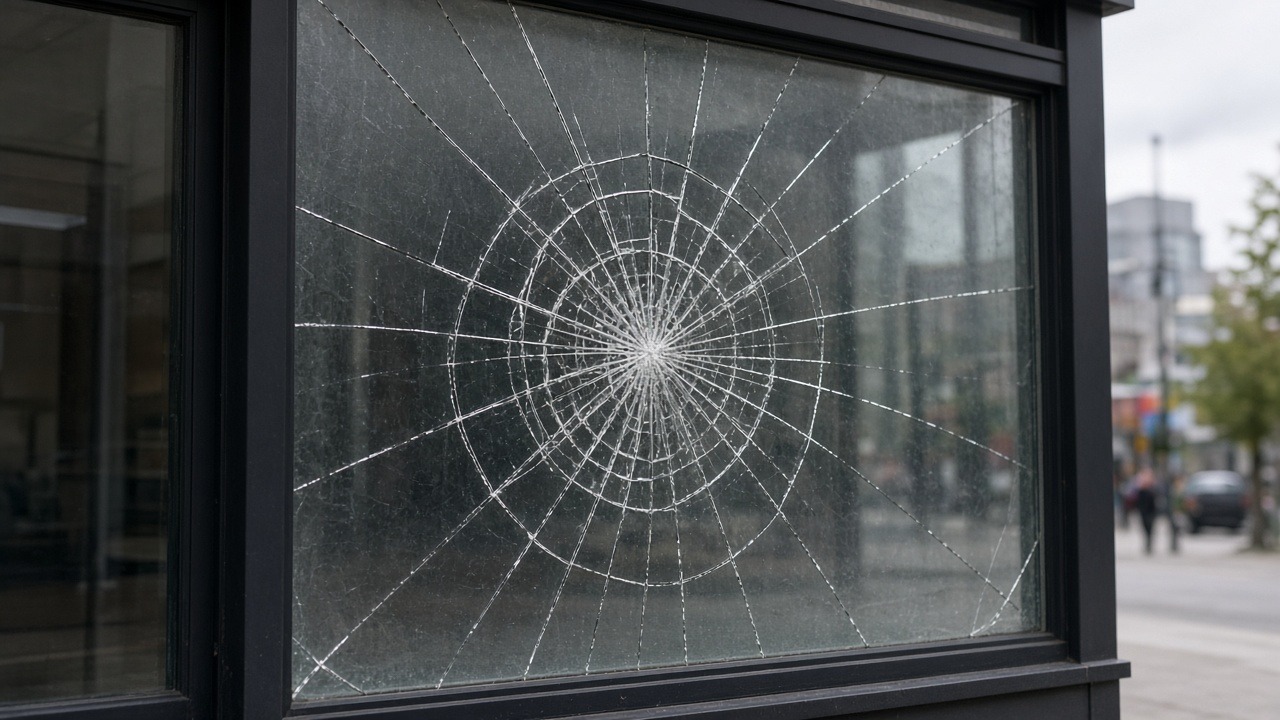
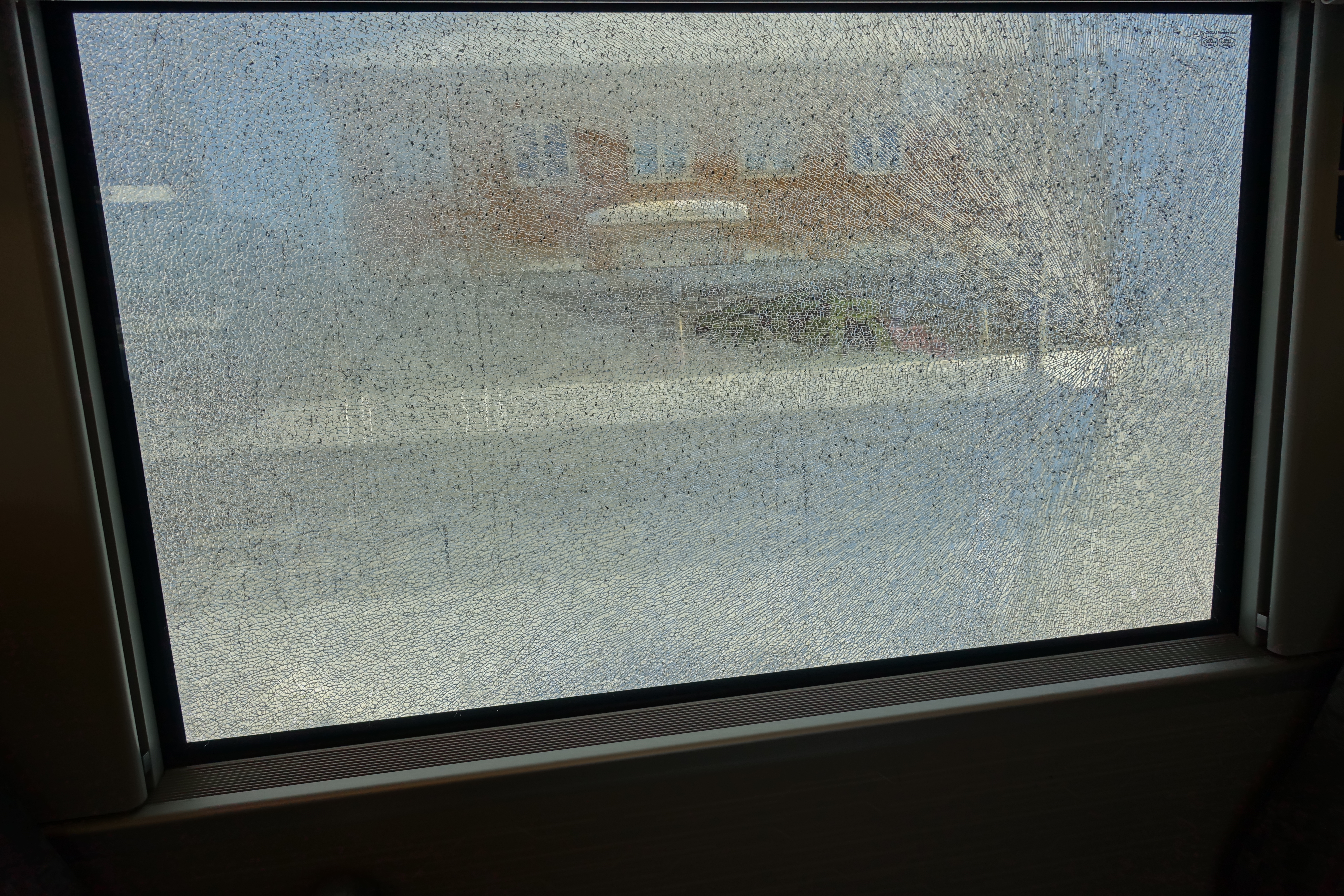
Safety film for windows is a thick, optically clear (or lightly tinted) polyester film applied to the interior surface of glass. It does not prevent glass from breaking, glass still shatters on impact. What it does is bond to the broken fragments, keeping them adhered to the film rather than scattering as dangerous shards.
This is meaningfully different from decorative window tint, which is typically 1.5, 2 mil thick and designed primarily to reduce light or add privacy. Safety film starts at 4 mil (approximately 0.1mm) and runs to 14 mil or heavier for security-grade applications. The thickness and adhesive layer are engineered to absorb and distribute impact energy, not just hold fragments passively.
Key Certifications
- ANSI Z97.1 Category I and Category II: The American National Standard for safety glazing materials in buildings. Category I covers glazing in areas with limited fall exposure (typically commercial and non-residential applications). Category II covers areas with greater fall exposure risk, including residential use. Safety film certified to Z97.1 satisfies BC Building Code requirements for hazardous glazing locations when applied to existing glass.
- CPSC 16 CFR 1201: The U.S. Consumer Product Safety Commission standard, the residential equivalent of ANSI Z97.1. Films certified under either standard are recognized for building code compliance in BC.
- UL 972: Underwriters Laboratories standard for Burglary Resisting Glazing Material. This is the security-grade rating, films carrying UL 972 certification are tested for resistance to forced entry (repeated hammer blows, not just accidental impact). Safety film and security film are often the same product; security film is simply tested and certified to a higher standard.
How Safety Film Works on Impact
When glass breaks, the film acts as a membrane. The adhesive layer (pressure-sensitive, applied during installation) bonds the polyester to the glass surface. On impact, the glass fractures as it would without film, but the fragments remain attached to the film substrate rather than projecting outward or collapsing inward. This is called fragment retention. For forced-entry scenarios, the intact film-and-glass assembly also forces an attacker to make repeated impacts to penetrate, significantly extending breach time.
LLumar and Vista Certified Safety Film
Ecovision installs LLumar and Vista safety and security films, both manufactured by Eastman Chemical Company. Both brands offer ANSI Z97.1 Category I and Category II certified products, with options ranging from 4-mil safety film for residential BC Building Code compliance to 14-mil safety-security combination films certified to both ANSI Z97.1 and UL 972 for commercial high-risk applications. Both product lines carry documented third-party test certifications, which Ecovision provides as part of its written installation documentation for compliant projects.
Safety Film vs Security Film vs Shatterproof Film, What’s the Difference?
The three terms appear interchangeably in search results and marketing materials. Here’s what they actually mean from a technical and regulatory standpoint:
| Term | What It Means | Certification | Best For |
|---|---|---|---|
| Safety film | Holds glass fragments together after impact, preventing injury from breakage | ANSI Z97.1 Category I or II / CPSC 16 CFR 1201 | BC Building Code compliance, injury prevention, shower enclosures, door sidelights |
| Security film | Designed and tested to resist forced entry, not just accidental impact | ANSI Z97.1 + UL 972 | Break-in prevention, commercial storefronts, high-risk glazed openings |
| Shatterproof film | A consumer marketing label for any fragment-retaining film, no technical standard attached to this term | Varies, may or may not meet ANSI Z97.1 | Consumer-facing language; always verify the underlying certification before purchasing |
The practical takeaway: if your goal is BC Building Code compliance or WorkSafeBC compliance, ask for the specific ANSI Z97.1 category the film is certified to. “Shatterproof film” is a marketing term with no regulatory meaning in BC.
When Does BC Building Code Require Safety Film?
BC Building Code Section 9.6.4: Hazardous Glazing Locations
BC Building Code Section 9.6.4 governs safety glazing in residential buildings. It requires certified safety glazing, which includes certified safety film applied to annealed glass, in locations where broken glass poses a significant injury risk due to human impact or fall. Specifically:
- Door sidelights within 900mm of the door latch: Any glazed panel within arm’s reach of a door handle must be certified safety glazing. This is one of the most common compliance gaps in Metro Vancouver homes built before the 1990s.
- Shower and bathtub enclosures: All glazing in wet areas where a person could fall against the glass.
- Stair landings: Glazed panels adjacent to stairways where a person could stumble into the glass.
- Low sidelights below 900mm from floor level: Any glazing within 900mm of the finished floor in a traffic area.
- Gymnasiums and change rooms: Institutional and multi-family applications where high-activity use increases impact risk.
WorkSafeBC OHS Regulation Part 4
For commercial workplaces, WorkSafeBC’s Occupational Health and Safety Regulation Part 4 requires that glazing in hazardous locations in the workplace, including doors, low windows, and glazed partitions in high-traffic areas, meet safety glazing standards. Certified safety film applied to existing annealed glass satisfies this requirement, making it a practical compliance path for older commercial buildings that were built before these requirements were in place.
The Exception: Fire-Rated Assemblies
Safety film cannot substitute for fire-rated glazing assemblies. If a glazed opening is part of a fire separation, a fire door assembly or a fire-rated wall, the glazing must meet the fire resistance rating for that assembly. Window film applied to fire-rated glass may void the fire rating. If you are unsure whether your glazing is part of a fire separation, consult your building’s construction drawings or contact Ecovision for a site assessment before proceeding.
How Much Does Safety Film for Windows Cost in Vancouver?
Installed cost depends on film thickness (which determines certification level), glass accessibility, and total square footage. All prices below are in CAD and include professional installation by a certified Ecovision installer.
| Film Type | Thickness | Standard Met | Installed Cost (CAD, per sq ft) |
|---|---|---|---|
| Safety film Category I | 4, 7 mil | ANSI Z97.1 Category I | $9, $14 |
| Safety film Category II | 8, 12 mil | ANSI Z97.1 Category II | $12, $18 |
| Security + safety combination | 12, 14 mil | ANSI Z97.1 + UL 972 | $15, $22 |
Typical Project Examples
- 3 door sidelights in a Vancouver home (approximately 15, 20 sq ft total): $240, $450 installed. Compare this to $750, $1,800 to replace the same panels with new tempered or laminated safety glass, a saving of 60, 75% for the same code-compliant outcome.
- 200 sq ft commercial ground-floor retail storefront (ANSI Z97.1 Category I safety film): $2,400, $4,400 installed. Appropriate for most retail applications where the primary goal is fragment retention and injury prevention rather than forced-entry resistance.
- Full office floor, 500 sq ft of glazing (safety-security combination film): $4,500, $9,000 installed. This range reflects variation in glass type, accessibility, and whether after-hours scheduling is required.
What drives cost up: film thickness, high-rise or difficult-access glazing, after-hours scheduling, structural attachment systems (edge anchoring or daylight anchoring for security-grade applications), and custom-cut large panels. What drives cost down: ground-floor access, standard window sizes, and volume across multiple panels in a single visit.
Can Safety Film Replace Tempered Glass in BC?
In most applications covered by BC Building Code Section 9.6.4, yes. Certified safety film applied to existing annealed glass produces a glazing assembly that meets the same safety standard as tempered or laminated safety glass. The BC Building Code recognizes safety film as an acceptable safety glazing product, it is not a workaround or a stopgap; it is a code-compliant solution.
The cost comparison is compelling. A standard door sidelight replacement in annealed glass with new tempered safety glass typically runs $250, $600 per panel for materials and installation, depending on custom sizing. The same panel treated with certified ANSI Z97.1 Category I safety film costs $80, $150. For a home with multiple sidelights, a bathroom enclosure, and low-level glazing at a stair landing, the total cost difference can be $1,500, $4,000 or more.
Ecovision provides written certification documentation for all compliant safety film installations, including the film’s third-party test certification, the specific ANSI Z97.1 category, and an installation record, documentation that can be provided to a building inspector, property manager, or insurer on request.
Who Needs Safety Film for Windows in BC?
Safety film is relevant across a wider range of BC properties than most owners realize:
- Homeowners with door sidelights or glazed bathroom enclosures: Particularly relevant in homes built before the early 1990s when safety glazing requirements were less consistently enforced. Real estate transactions, renovation permits, and home insurance renewals can all surface this compliance gap.
- Strata buildings: Ground-floor common area glazing, lobby sidelights, gym and amenity room windows, and parkade entrance glazing are all potential compliance locations. Strata councils are increasingly asked to document safety glazing compliance during depreciation report updates.
- Commercial buildings subject to WorkSafeBC inspection: Retail, office, and light industrial buildings with glazed openings in high-traffic locations. WorkSafeBC inspectors can issue orders requiring compliance; safety film is the fastest, least disruptive path to compliance without glass replacement.
- Healthcare, childcare, and schools: Accreditation requirements from bodies like CARF (Commission on Accreditation of Rehabilitation Facilities) and licensing requirements for childcare facilities often require safety glazing in areas occupied by vulnerable populations. Certified safety film satisfies these requirements.
- Property managers doing lease renewals or insurance audits: Commercial landlords are increasingly asked to document safety glazing compliance as part of insurance underwriting. Proactive certification documentation from Ecovision can streamline this process.
Frequently Asked Questions About Safety Film for Windows
Is safety film for windows the same as security film?
They are closely related but not identical. Safety film is certified to ANSI Z97.1 or CPSC 16 CFR 1201 for fragment retention and injury prevention. Security film meets the same standard plus UL 972, which tests resistance to repeated forced-entry impacts. Many products carry both certifications. For BC Building Code compliance, ANSI Z97.1 Category I or II is the relevant standard.
Does safety film for windows meet BC Building Code?
Yes. Safety film certified to ANSI Z97.1 Category I or Category II satisfies BC Building Code Section 9.6.4 requirements for hazardous glazing locations when applied to existing glass. Ecovision provides written installation and certification documentation for all compliant projects to support building inspection or insurance requirements.
How much does safety film for windows cost in Vancouver?
Installed costs in Vancouver typically range from $9, $14 per sq ft for ANSI Z97.1 Category I film to $15, $22 per sq ft for combined safety-security film. A typical residential project covering 3 door sidelights runs $240, $450, significantly less than the $750, $1,800 cost of replacing those panels with new tempered safety glass. All prices are in CAD.
Can safety film be applied to double-pane windows?
Yes, with important caveats. Safety film can be applied to the interior surface of the interior pane of an IGU (insulated glass unit, or double-pane window). However, thicker films, particularly 8-mil and above, can affect the thermal stress balance of the IGU and, in some cases, may void the glass manufacturer’s warranty. Ecovision performs a thermal stress assessment before recommending film for double-pane applications. This is standard professional practice, not an upsell.
How long does safety film last in BC?
Professionally installed LLumar and Vista safety films carry manufacturer warranties of 10, 15 years for interior applications. In BC’s climate, significant UV exposure in summer, wet winters, and coastal humidity, interior-applied safety film typically performs for 12, 20 years before adhesive degradation or edge lifting requires replacement. Exterior-applied film has a shorter service life (7, 12 years) due to direct weather exposure. Regular cleaning with a soft cloth and mild, non-abrasive cleaner extends film life.
Is safety film required by law in BC?
Safety glazing (including certified safety film) is required by law in specific locations under BC Building Code Section 9.6.4 and WorkSafeBC OHS Regulation Part 4. If your glazing is in a hazardous location as defined by these regulations and it does not currently meet the safety glazing standard, it is a code violation. The requirement applies to new construction and to alterations, but also to existing buildings when a WorkSafeBC inspector identifies non-compliant glazing in a commercial workplace.
What is the difference between ANSI Z97.1 Category I and Category II?
Category II is the more demanding standard. It is tested with a higher-impact load (a 100-pound impactor bag dropped from greater height) and is required in locations with greater fall exposure potential, typically residential applications and locations where children or elderly people are present. Category I is tested to a lower impact standard and is generally used in commercial applications with limited fall exposure. BC Building Code specifies which category applies to each hazardous location type; Ecovision will confirm the required category during a site assessment.
Can I install safety film myself or do I need a professional?
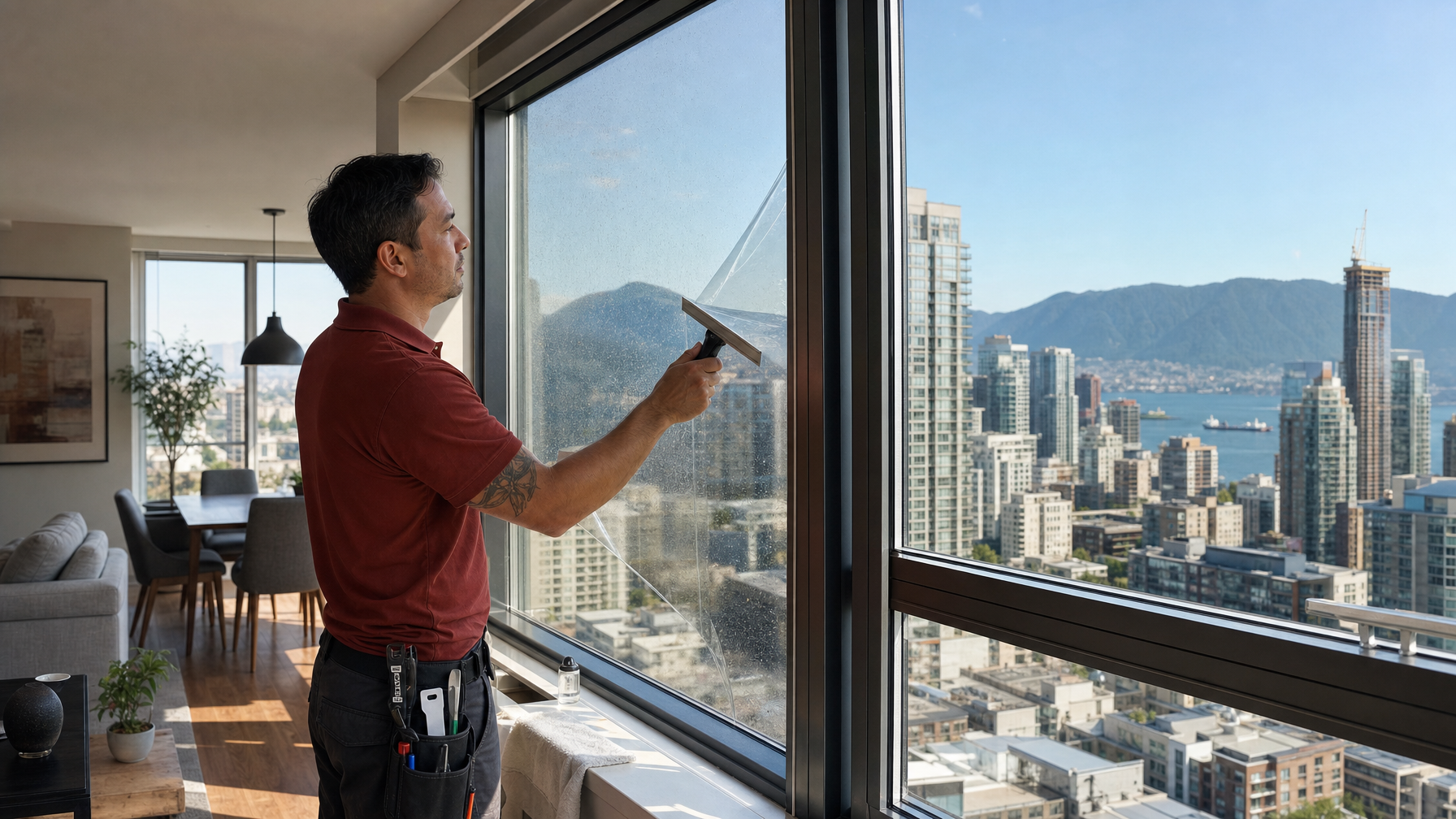
DIY safety film kits are available, but professional installation is strongly recommended for any application where BC Building Code or WorkSafeBC compliance is the goal. Professional installation ensures correct film selection (the right ANSI Z97.1 category for each location), correct adhesive activation, elimination of bubbles and contamination that compromise adhesion, and written documentation of the certified installation. DIY installations cannot be certified for code compliance purposes and may fail adhesion testing if inspected.
Get a Safety Film Assessment for Your Vancouver Property
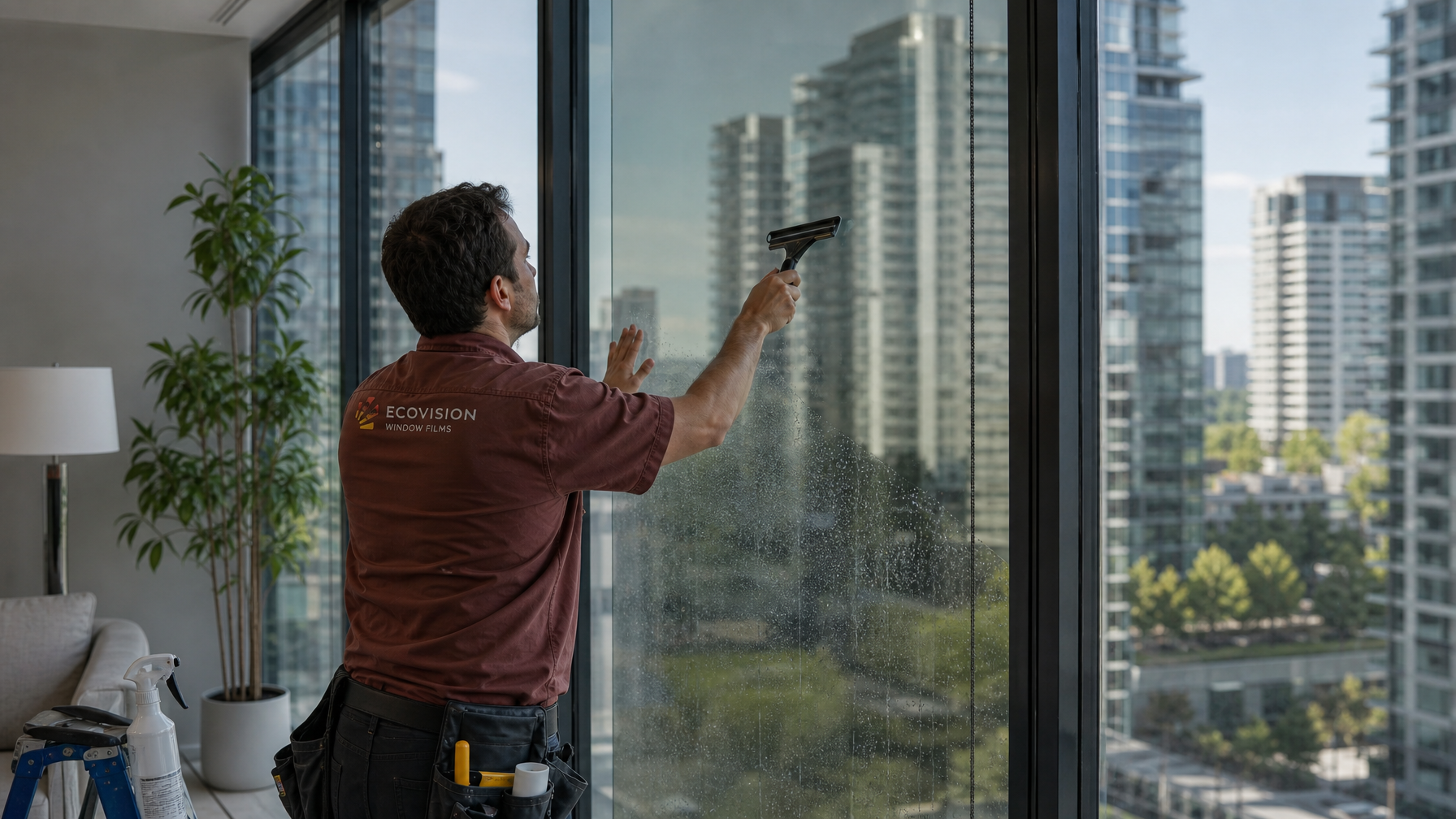
Ecovision Window Films installs LLumar and Vista certified safety film across Metro Vancouver and the Lower Mainland, including Vancouver, Burnaby, Richmond, Surrey, North Vancouver, West Vancouver, Coquitlam, and Langley. We provide written certification documentation with every compliant installation.
To discuss your property’s safety glazing requirements or schedule a site assessment, call (236) 862-0052 or submit an inquiry online. You can also learn more about our full range of security and safety film solutions at our security window solutions page.