
Opaque window film for commercial construction in BC typically costs $10 – $16 per square foot installed and blocks 95 to 99% of visibility through glass during active build-out, tenant fit-out, and staged occupancy. General contractors use it as a temporary or long-term privacy layer on curtain wall and storefront glass without boarding windows. Ecovision Window Films installs LLumar and Vista opaque and near-opaque privacy grades for commercial construction projects across Vancouver and the Lower Mainland.
Construction teams and property managers often need glass that stays sealed and weather-tight while interiors remain invisible to the street, neighbouring towers, and site visitors. Opaque film solves that without plywood, spray frost that fails inspection, or full window replacement. This guide covers film types, when to specify opaque versus frosted, cost ranges, sequencing with other trades, and what BC commercial projects should expect from a certified installer.
What Is Opaque Window Film for Commercial Construction?
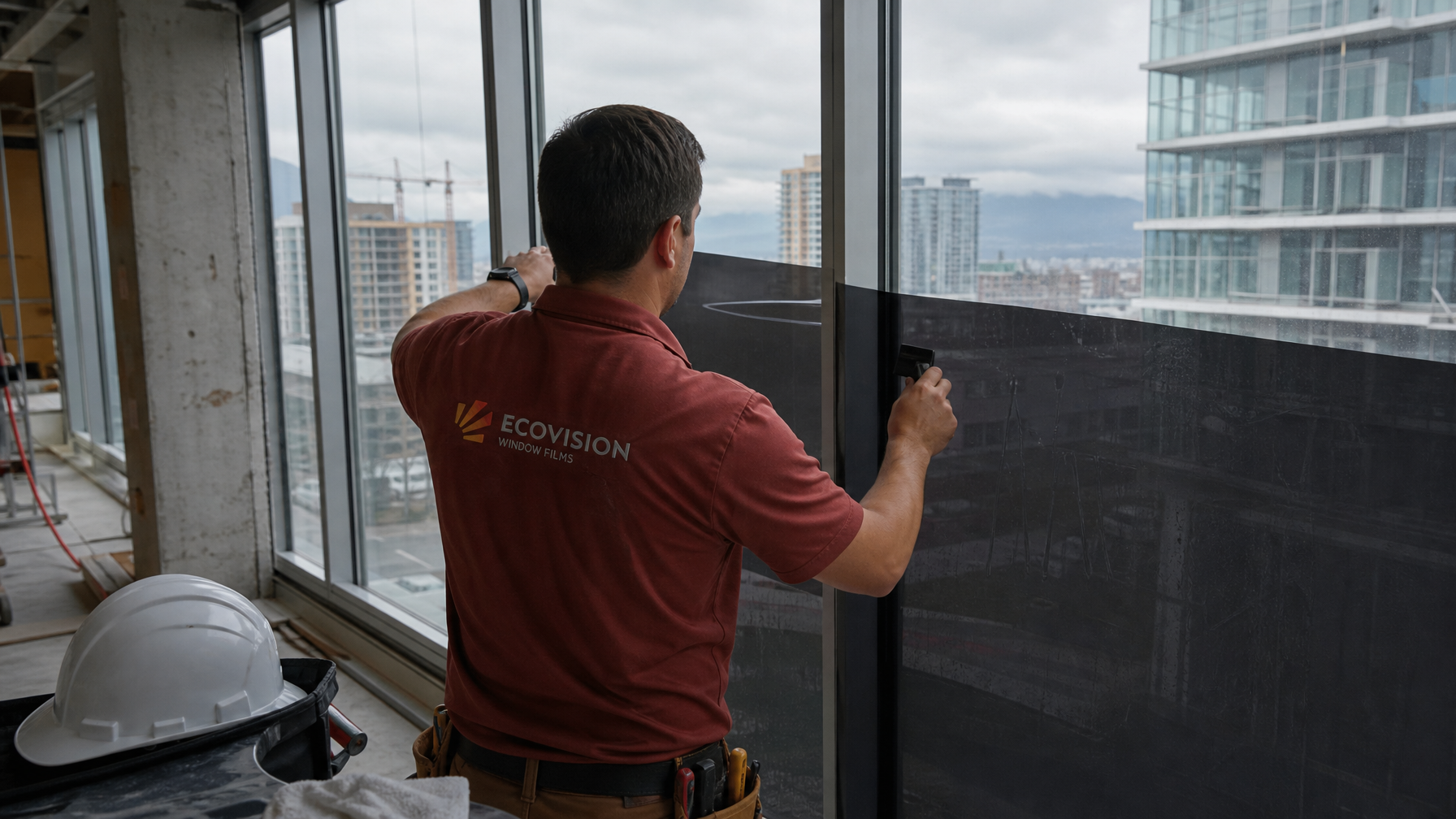
Opaque window film is a high-opacity architectural film applied to the interior face of finished glass. Unlike light frosted film (30 to 55% visible light transmission), true opaque and near-opaque privacy grades sit at roughly 5 to 15% VLT or lower, so exterior viewers cannot see tools, unfinished drywall, staged furniture, or occupant activity. LLumar dual-reflective privacy grades such as DR05 (about 5% VLT) and DR15 (about 13% VLT) are common specifications when contractors need blackout-level privacy with a clean architectural finish.
On commercial construction sites, film is usually specified after exterior glazing is complete and before or during interior fit-out. The glass remains part of the building envelope. Film adds privacy, reduces site curiosity traffic, and can stay in place after handover if the tenant wants permanent privacy on select elevations. Ecovision has applied the same class of privacy film on commercial interiors at Bentall 4 in downtown Vancouver, where conference and support glass needed strong visual control without darkening the entire floor plate.
Why Do BC Contractors Specify Opaque Film Instead of Boarding Glass?
Boarding windows with plywood blocks light, requires re-work at inspection, and often violates strata or municipal temporary-enclosure rules on occupied towers. Opaque film keeps natural light reduced but usable on the interior face of the glass stack, preserves a finished exterior look for marketing photos, and installs in hours rather than days of carpentry. A typical 200 to 400 square foot storefront or podium curtain-wall bay can be filmed in one shift with a two-person crew.
For multi-phase projects, film also stages well. Phase 1 floors can stay opaque while Phase 2 floors receive clear solar control such as LLumar VS60 (59% VLT, 50% TSER) or VS70 (62% VLT, 49% TSER) once interiors are ready for occupancy. That sequencing is common on Vancouver office and mixed-use builds where marketing suites and active construction share the same glass line.
What Types of Opaque and Near-Opaque Film Work on Construction Glass?
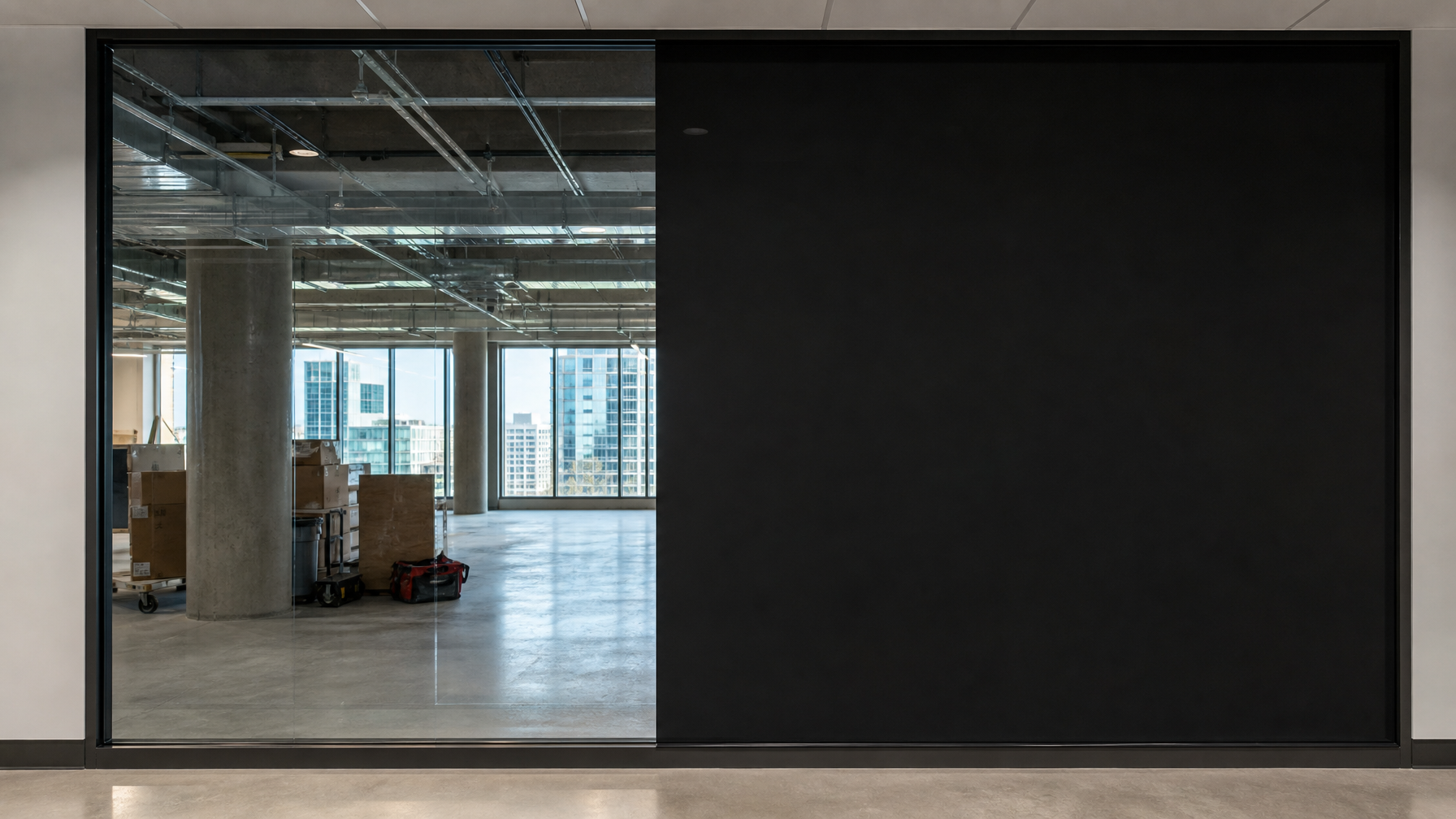
Not every dark film is appropriate for construction glass. Specifiers should separate true privacy dual-reflective grades from light frost, decorative white-out graphics vinyl, and temporary spray coatings. The table below summarizes options Ecovision commonly recommends for BC commercial construction and fit-out.
| Film category | Approx. VLT | Best construction use | Installed price (per sq ft) |
|---|---|---|---|
| Near-opaque dual-reflective (e.g. DR05) | ~5% | Full visual blackout on street and tower elevations | $12 – $16 |
| High privacy dual-reflective (e.g. DR15 / DR25) | ~13 to 25% | Strong privacy with some residual daylight | $11 – $15 |
| High-opacity frosted / matte white | ~10 to 25% | Bright whiteout look, branding-ready glass | $10 – $14 |
| Standard frosted matte | ~30 to 55% | Soft privacy only; not true opaque | $9 – $12 |
| Security + privacy laminates | Varies | Occupied sites needing shatter hold plus privacy | $16 – $22 |
Ecovision installs LLumar and Vista architectural lines only. For permanent privacy after handover, dual-reflective privacy grades outperform temporary white vinyl because they are designed for multi-year glass adhesion, cleaner edges, and professional removal without etching the lite. Temporary construction graphics vinyl still has a role for short marketing wraps, but it is a different product category from architectural privacy window film.
How Much Does Opaque Window Film Cost for Commercial Construction in BC?
Professionally installed opaque and near-opaque privacy film for commercial construction in Metro Vancouver generally runs $10 – $16 per square foot for standard access interior application. Security-reinforced privacy combinations land at $16 – $22 per square foot. High-rise swing-stage, after-hours only access, or heavily obstructed floors add labour. A 500 square foot podium glass package at $12 – $15 per square foot is typically $6,000 – $7,500 installed before taxes and access premiums.
Compared with temporary boarding, opaque film often costs less once you count carpentry labour, disposal, and reinstall of finished reveals. Compared with replacing clear glass with factory spandrel or ceramic frit, film is usually one-third to one-half the cost and can be removed or changed when the tenancy plan changes. For broader BC pricing context across film types, see Ecovision’s 2026 window film cost guide for BC.
When Should Opaque Film Go On During the Construction Schedule?
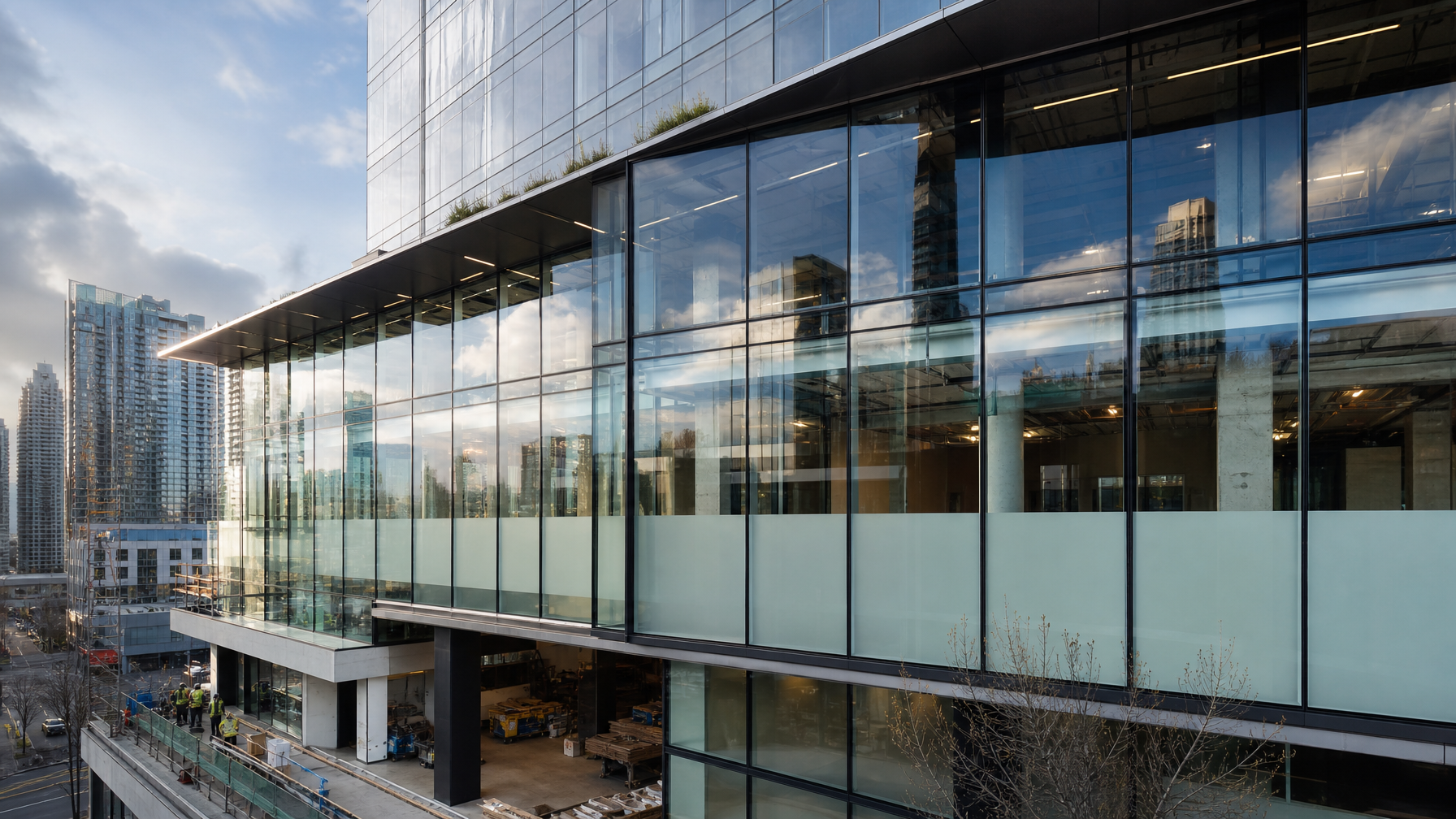
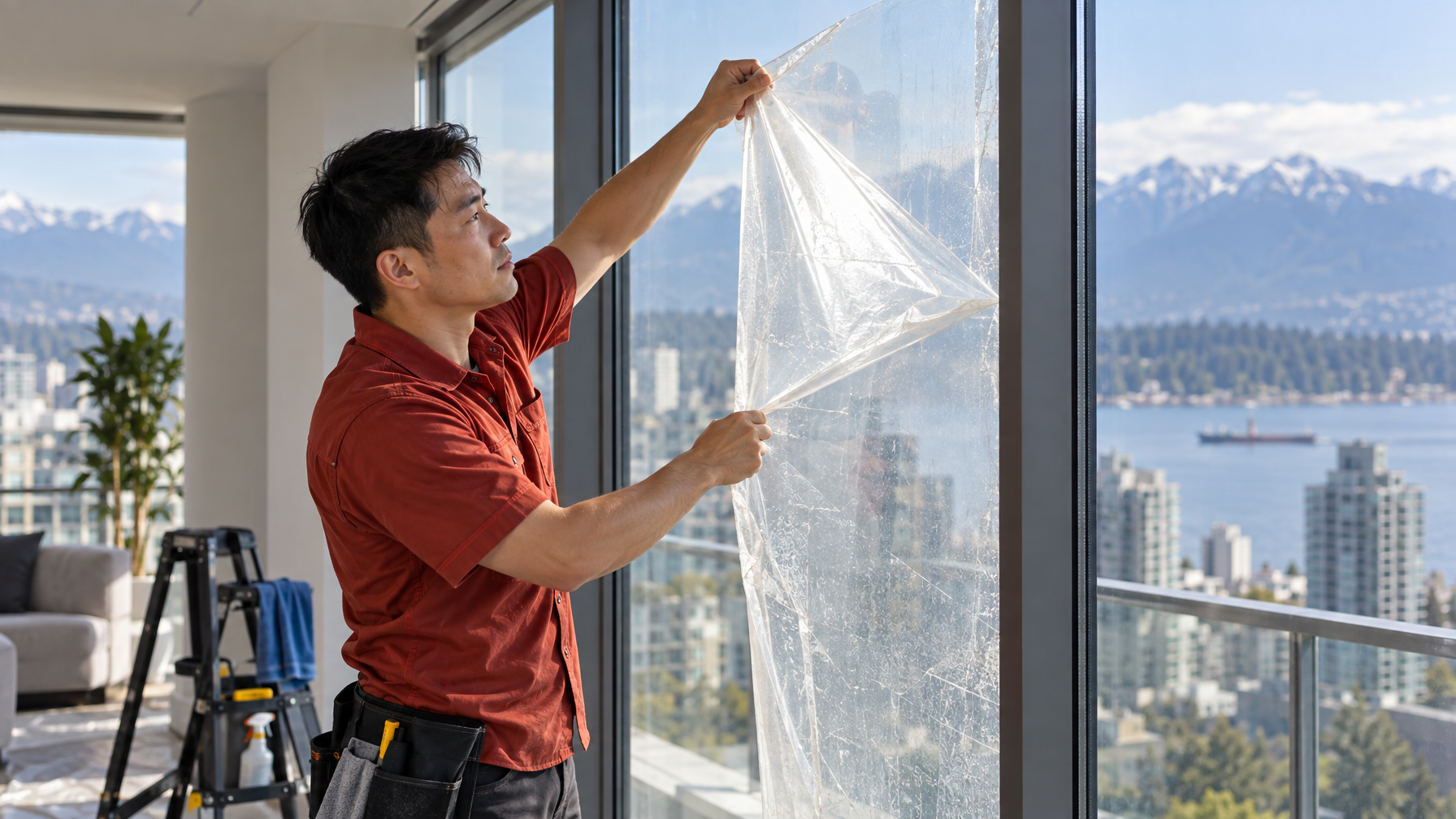
Best practice is to install after exterior glass is cleaned, sealed, and accepted, and after major dust-producing trades (cutting, grinding, spray fireproofing) have finished in that bay. Film needs a clean, dry interior glass surface. Wet-apply installation uses a slip solution; full adhesive cure takes 30 to 60 days. During cure, avoid abrasive cleaners and heavy tape on the film face.
If later phases need clear solar film instead of opaque privacy, plan removal or panel-by-panel replacement into the schedule. Professionally installed architectural film is removable, but rushed DIY peel on fresh film risks adhesive residue. Ecovision sequences commercial commercial window film work with general contractors so privacy floors, marketing suites, and final solar packages do not collide on the same elevation.
Does Opaque Film Meet BC Commercial and Safety Expectations?
Opaque privacy film does not replace fire-rated glazing, tempered safety glass labels, or WorkSafeBC fall-protection rules on open floors. It is a surface treatment on already-specified glass. Where impact resistance is also required (street-level retail on active sidewalks, ground-floor openings near public lanes), pair privacy with clear safety film such as LLumar SCL SR PS series (PS4, PS7, PS8, or PS13 depending on thickness target) rather than relying on opacity alone.
For energy and comfort after occupancy, opaque privacy is not a substitute for high-performance solar control. Once interiors are finished and privacy demand drops, many BC property managers convert select elevations to VS60 or VS70 to reclaim daylight while holding roughly 49 to 50% total solar energy rejection on 6 mm dual clear reference glass. That path is familiar on tower projects similar in scale to work Ecovision has completed on commercial assets such as Bentall 4 and heat-control programs for large glazed properties including Rocky Mountaineer-related facilities.
How Do You Specify Opaque Film on a BC Tender or Fit-Out Package?
Write the specification with four fields: film manufacturer and series (LLumar or Vista architectural), target VLT or privacy level, interior application only unless exterior-rated product is approved, and warranty term for professional installation. Include square footage by elevation, access method (scissor, boom, swing stage), working hours, and whether film is temporary (removal date) or permanent. Attach glass type notes (annealed, tempered, laminated, low-E coatings) so the installer can confirm adhesion compatibility before mobilization.
Ecovision provides on-site glass surveys, mock-up panels, and fixed-price packages for general contractors and construction managers across Metro Vancouver, Burnaby, Surrey, and the broader Lower Mainland. Call (236) 862-0052 or use the contact page for a construction-phase estimate with schedule windows that match your occupancy plan.
Related Articles
- Frosted Window Film in Vancouver: Types, Costs, and What to Know Before You Buy
- Security Film for Storefronts in Vancouver: What BC Business Owners Need to Know
- Clear Heat Control Window Film for Retail Storefronts: What BC Business Owners Need to Know
- Can Vinyl Decals and Graphics Be Applied Over Window Film? What BC Property Owners Need to Know
- How Much Does Window Film Cost in BC? (2026 Pricing Guide)
Frequently Asked Questions
Is opaque window film the same as frosted film?
No. Frosted film scatters light and often still shows silhouettes, especially at 30 to 55% VLT. Opaque and near-opaque privacy grades (about 5 to 15% VLT) block clear views for construction and high-privacy commercial glass. Ecovision specifies the opacity level after reviewing elevation exposure on each BC site.
How much does opaque window film cost for commercial construction in Vancouver?
Most commercial opaque privacy installs in Metro Vancouver run $10 – $16 per square foot for standard interior access. Security-plus-privacy packages run $16 – $22 per square foot. High-rise access and after-hours work add labour. Ecovision quotes by elevation after a glass survey.
Can opaque film be removed after construction is finished?
Yes. Professionally installed LLumar and Vista architectural film is removable. Plan removal after the 30 to 60 day cure window when possible, and budget professional peel to avoid adhesive residue on low-E glass. Many tenants keep privacy film on select panels after handover.
Does opaque film work on low-E commercial glass in BC towers?
In most cases yes, when applied to the correct interior surface and confirmed against the IGU coating orientation. Ecovision checks glass type before install so adhesion and thermal stress risks stay within manufacturer guidance for LLumar and Vista products.
Should construction sites use film or plywood on street-facing glass?
Film is usually preferred when glass is already installed and the exterior must stay presentable. Plywood blocks light, looks unfinished, and creates extra carpentry. Opaque film keeps the envelope closed, reduces street-level viewing into the fit-out, and can remain as permanent privacy if the tenant wants it.
About the Author: This article was written by the Ecovision Window Films team. Edward, Director at Ecovision, brings a distinctive perspective to the window film industry, with over a decade in real estate development, including roles as Executive Director at a real estate development firm and Director of Strategic Partnerships, before joining Ecovision. That background gives the company a sharp edge in serving BC property managers and building owners. Ecovision is a certified installer for leading film brands with completed projects for healthcare facilities, government buildings, and commercial properties throughout the Lower Mainland. For a free site assessment, call (236) 862-0052 or visit ecovisioncanada.com/contact/.