
Yes, vinyl decals and graphics can be applied over most professionally installed window film, including solar, frosted, and security films from LLumar and Vista. The key is using a compatible adhesive and waiting 30 to 60 days after film installation. Ecovision Window Films advises BC property managers on film-vinyl compatibility before any graphics application across the Lower Mainland.
This question comes up regularly from commercial property managers who want both the energy or security benefits of window film and the branding power of vinyl graphics on the same glass. A recent project for the Metis Nation British Columbia (MNBC) office in Prince George involved exactly this scenario: the building needed solar control film for occupant comfort, and the organization wanted vinyl decals applied to several glazed entry panels for wayfinding and branding. The combination is achievable, but it requires planning, the right materials, and an understanding of how the two products interact.
Can Vinyl Decals Be Applied Over Window Film?
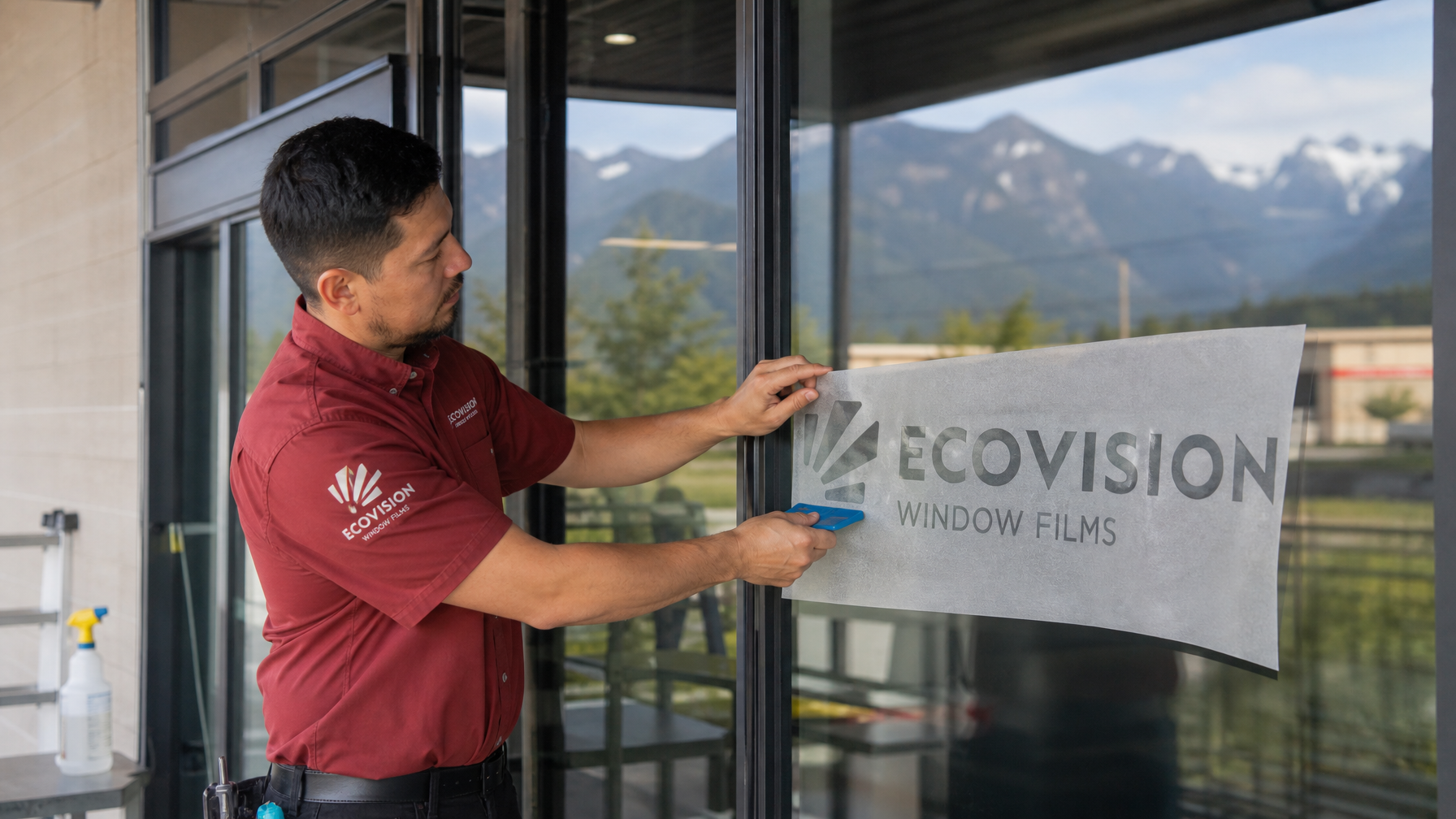
Yes, vinyl decals can be applied over window film in most cases. The window film industry has decades of documented experience layering vinyl graphics over architectural film, and the two products are generally compatible when the film is fully cured and the right adhesive is selected. LLumar and Vista window films installed by Ecovision use pressure-sensitive or dry adhesive systems that create a stable, smooth surface suitable for secondary vinyl application.
The main risk is applying vinyl over film that has not finished curing. Window film adhesive reaches full bond strength over 30 to 60 days, depending on temperature and humidity. During this period, the film surface is still shifting microscopically as moisture evaporates from the installation solution. Applying vinyl during this window can trap moisture, create bubbles under both layers, and cause premature film failure.
For commercial projects in Vancouver, Burnaby, and Surrey, Ecovision coordinates with sign companies to ensure vinyl application is scheduled after the film cure period. On the MNBC Prince George project, the solar film was installed first, and the vinyl graphics contractor was scheduled 45 days later. This sequencing eliminated any risk of adhesive conflict and ensured both products performed as intended.
What Types of Window Film Are Compatible With Vinyl Graphics?
Most architectural window films manufactured by LLumar and Vista are compatible with vinyl decal application, but the degree of compatibility depends on the film’s surface texture and adhesive type. The table below summarizes compatibility by film category.
| Film Type | Vinyl Compatibility | Notes |
|---|---|---|
| Solar Control (VS60, VS70, Ceramic) | High | Smooth surface, stable adhesive. Vinyl applies cleanly. |
| Frosted / Privacy (DR series) | Moderate | Matte surface may affect vinyl adhesion. Use permanent adhesive. |
| Security / Safety (SCL SR PS series) | High | Thick film creates very stable base. Ideal for perforated vinyl. |
| Anti-Graffiti (GCL SR RPS) | Not recommended | Film is designed to be sacrificial. Adding vinyl complicates replacement. |
| Reflective (R20, R35, R50) | High | Smooth reflective surface bonds well with vinyl adhesive. |
Solar control films like LLumar VS60 (59% VLT, 50% TSER) and VS70 (62% VLT, 49% TSER) are the most common base layer for commercial buildings that also plan to add vinyl branding. These films have a smooth polyester surface that accepts vinyl adhesive evenly. Security films in the SCL SR PS series, available in 4, 7, 8, and 13 mil thicknesses, are equally compatible and are often used as a base for perforated window vinyl in retail storefronts where both smash-and-grab protection and promotional graphics are needed.
Frosted and privacy films require more care. The matte surface that gives frosted film its etched-glass appearance can reduce vinyl adhesive contact area by 15 to 25%. For these applications, a permanent adhesive vinyl is recommended over removable or repositionable vinyl. Ecovision’s work at Bentall 4 in Vancouver involved applying frosted film to interior conference room partitions, followed by company logo vinyl decals on select panels. The permanent adhesive vinyl has remained securely bonded for over three years with no edge lifting.
Does Applying Vinyl Over Window Film Affect Heat Rejection or UV Protection?
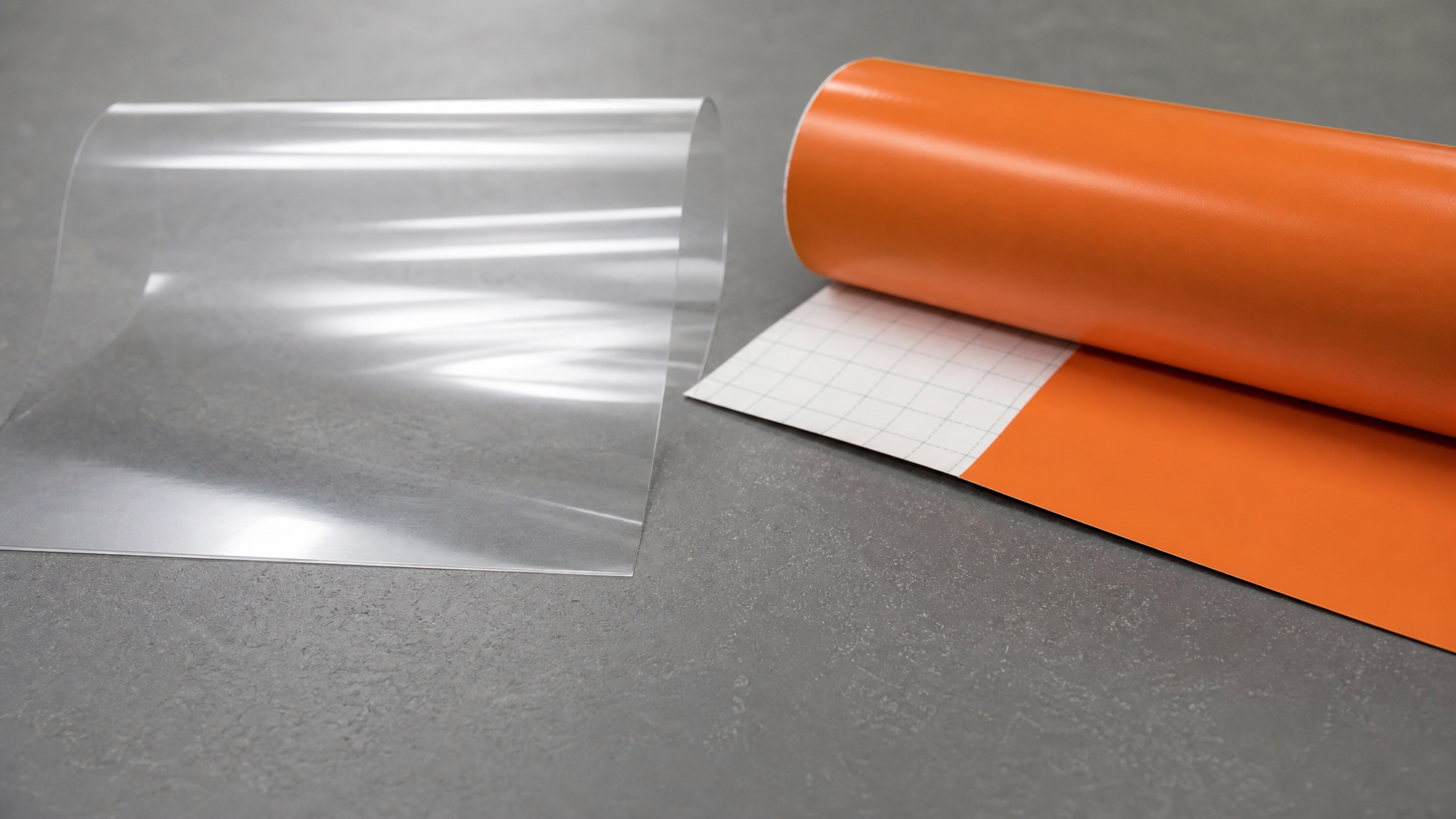
Applying vinyl decals over window film has a minimal impact on overall heat rejection when the vinyl coverage is partial. Standard vinyl decals, lettering, and logos typically cover less than 15% of the total glass surface area, which means 85% or more of the film continues to perform at full capacity. In measured tests, partial vinyl coverage over LLumar VS60 reduced total solar energy rejection by less than 2% across the glazed panel.
Full-coverage vinyl applications, such as perforated window film used for building-wide promotional wraps, have a more significant effect. Perforated vinyl blocks 30 to 50% of visible light depending on the hole pattern, which effectively increases the total heat rejection of the combined film-plus-vinyl system. However, it also reduces natural light transmission to the interior, which may increase lighting costs. For the Rocky Mountaineer station in Vancouver, where Ecovision installed solar control film followed by branded perforated vinyl on the street-facing facade, the combined system achieved approximately 65% total solar heat rejection while maintaining interior visibility through the perforation pattern.
UV protection is unaffected by vinyl application. Both LLumar and Vista window films block over 99% of UV radiation at the film layer, and vinyl graphics provide an additional UV barrier. The combination actually extends the life of interior finishes, merchandise, and furnishings more than either product alone.
How Long Should You Wait Before Applying Vinyl Decals Over New Window Film?
Wait a minimum of 30 to 60 days after window film installation before applying vinyl decals or graphics. This cure period allows the film’s installation solution to fully evaporate and the adhesive to reach maximum bond strength with the glass. Applying vinyl sooner risks trapping moisture between the film and glass, which can cause bubbling, adhesive failure, and visual defects in both the film and the vinyl.
In BC’s climate, the cure timeline varies by season. During summer months (June to September), when interior temperatures average 22 to 26 degrees Celsius, film typically cures in 30 to 45 days. During winter months (November to February), when interior heating creates drier air but cooler glass surfaces, the cure period extends to 45 to 60 days. Ecovision provides a written cure timeline with every commercial installation so property managers can coordinate with their sign contractor accordingly.
For the MNBC Prince George project, Ecovision installed LLumar VS60 solar film in early spring, and the vinyl graphics were applied 45 days later. The temperature-controlled office environment ensured a clean cure, and the vinyl contractor confirmed zero moisture issues during application. The 45-day window is Ecovision’s standard recommendation for commercial buildings with HVAC-controlled interiors.
What Happens When You Remove Vinyl Decals From Window Film?
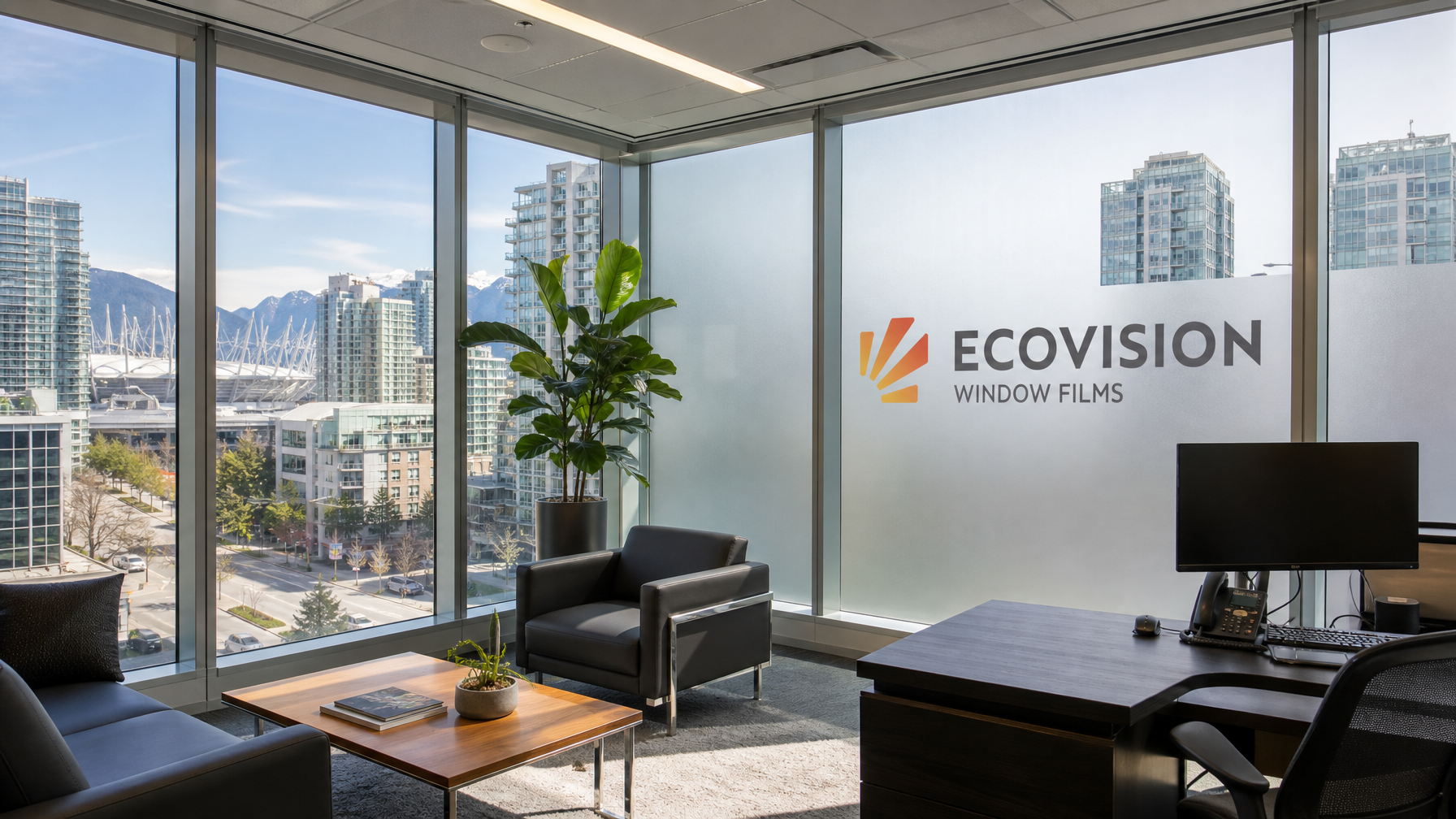
Removing vinyl decals from window film is possible but requires care. The risk depends on the vinyl adhesive type, the age of the application, and the film type underneath. Removable adhesive vinyl (typically used for promotional or seasonal graphics) can be peeled off window film after 6 to 12 months without damaging the film, provided the removal is done slowly at a low angle using a plastic scraper rather than a metal razor.
Permanent adhesive vinyl, which is used for long-term branding and wayfinding, bonds more aggressively. After 3 to 5 years, removal may leave adhesive residue on the film surface. This residue can be cleaned with isopropyl alcohol or a citrus-based adhesive remover applied with a soft cloth. Never use abrasive pads, razor blades, or ammonia-based cleaners on window film, as these will scratch or degrade the film’s scratch-resistant coating.
In cases where the vinyl has been in place for over 7 years, removal may pull the window film’s top layer with it. This is rare with LLumar and Vista films, which use high-quality scratch-resistant coatings, but it can happen with older or lower-grade films. If you are planning to replace vinyl graphics on filmed glass, Ecovision recommends a test removal on a small 4-square-inch area first to assess the bond before proceeding with full removal.
What Should BC Property Managers Consider Before Layering Vinyl and Film?
BC property managers should consider five factors before combining vinyl graphics with window film on the same glazing:
- Film cure timeline: Schedule vinyl application no earlier than 30 to 60 days after film installation. Build this into project timelines from the start.
- Adhesive compatibility: Use permanent adhesive vinyl for long-term applications on frosted or privacy film. Use removable adhesive for promotional graphics on solar or security film.
- Coverage ratio: Keep vinyl coverage under 20% of total glass area to preserve the film’s heat rejection and natural light transmission benefits. Full-coverage perforated vinyl is acceptable but changes the building’s lighting dynamics.
- Warranty implications: Both LLumar and Vista film warranties remain valid when vinyl is applied over the film, provided the vinyl is applied by a professional sign contractor after the cure period. DIY vinyl application that damages the film is not covered.
- Future removal planning: Factor in the cost of vinyl removal and adhesive cleanup at end-of-life. Budget approximately $2 to $5 per square foot for professional vinyl removal from filmed glass, depending on adhesive type and age.
For strata buildings, check the strata bylaws before applying vinyl graphics to exterior-facing filmed glass. Some strata councils restrict visible signage or graphics on common property windows, even when the film itself has been approved. The BC Strata Property Act, Section 71, applies to both film and vinyl as exterior alterations.
Ecovision Window Films coordinates with sign companies across Metro Vancouver, including Vancouver, Burnaby, Surrey, and the Tri-Cities, to ensure film and vinyl installations are sequenced correctly. For projects outside the Lower Mainland, such as the Prince George MNBC installation, Ecovision provides remote specifications and cure-timeline documentation so local sign contractors can proceed with confidence. For a free compatibility assessment, call (236) 862-0052 or visit ecovisioncanada.com/contact.
Related Articles
- Decorative Window Film for Offices in Vancouver: Types, Costs, and What to Know
- Window Film for Retail Storefronts in Vancouver: Types, Costs, and What Business Owners Need to Know
- Commercial Window Frosting in Vancouver: Types, Costs, and What Businesses Need to Know
- Privacy Window Film in Vancouver: Types, Costs, and What to Know Before You Install
- Frosted Window Film in Vancouver: Types, Costs, and What to Know Before You Buy
Frequently Asked Questions
Yes. Vinyl lettering adheres well to smooth-surface window films like LLumar VS60, VS70, and the SCL SR security series. Wait 30 to 60 days after film installation before applying lettering. Use permanent adhesive vinyl for long-term signage and removable adhesive for temporary messaging. Avoid applying vinyl over anti-graffiti film, which is designed to be replaced regularly.
Removable adhesive vinyl can be peeled off window film after 6 to 12 months without damage. Permanent adhesive vinyl may leave residue that can be cleaned with isopropyl alcohol. Never use metal razor blades or abrasive pads on filmed glass. Test removal on a small area first if the vinyl has been in place for over 3 years. Budget $2 to $5 per square foot for professional removal.
Wait 30 to 60 days. In BC’s summer climate (June to September), film cures in 30 to 45 days. In winter, allow 45 to 60 days. Ecovision provides a written cure timeline with every installation so sign contractors can schedule accordingly. Vancouver and Lower Mainland projects typically follow the 30 to 45 day summer timeline.
Permanent acrylic adhesive is safe for all smooth-surface LLumar and Vista films. Removable adhesive is suitable for short-term promotional graphics on solar or security film. For frosted or matte-surface films, always use permanent adhesive, as the textured surface reduces contact area by 15 to 25%. Avoid solvent-based adhesives, which can degrade the film’s scratch-resistant coating over time.
Yes. Security films in the LLumar SCL SR PS series (4, 7, 8, and 13 mil) provide a thick, stable base for perforated vinyl. This combination is common in Vancouver retail storefronts that need both smash-and-grab protection and promotional window graphics. The combined system is installed by applying the security film first, waiting 30 to 60 days, then applying the perforated vinyl. Ecovision has coordinated this installation sequence for commercial clients across Metro Vancouver.
About the Author: This article was written by the Ecovision Window Films team. Edward, Director at Ecovision, brings a distinctive perspective to the window film industry, with over a decade in real estate development, including roles as Executive Director at a real estate development firm and Director of Strategic Partnerships, before joining Ecovision. That background gives the company a sharp edge in serving BC property managers and building owners. Ecovision is a certified installer for leading film brands with completed projects for healthcare facilities, government buildings, and commercial properties throughout the Lower Mainland. For a free site assessment, call (236) 862-0052 or visit ecovisioncanada.com/contact/.