

An optical store asks a lot of its glass. The storefront introduces the business to the street, while the glazing around the eyewear display sits close to the products people have come to see. Both belong in a conversation about protection, but they need to be identified and considered in their own settings.
Ecovision installed 9 mil security film at Prestige Optical at 2950 W Broadway in Vancouver. The work covered two distinct areas: storefront glazing and glass at the eyewear display. The project shows why it pays to look past the front window when planning retail glass protection. Start with the glass customers see and the spaces your team uses every day.
The front glass and the eyewear display serve different roles, so both belong in the assessment.
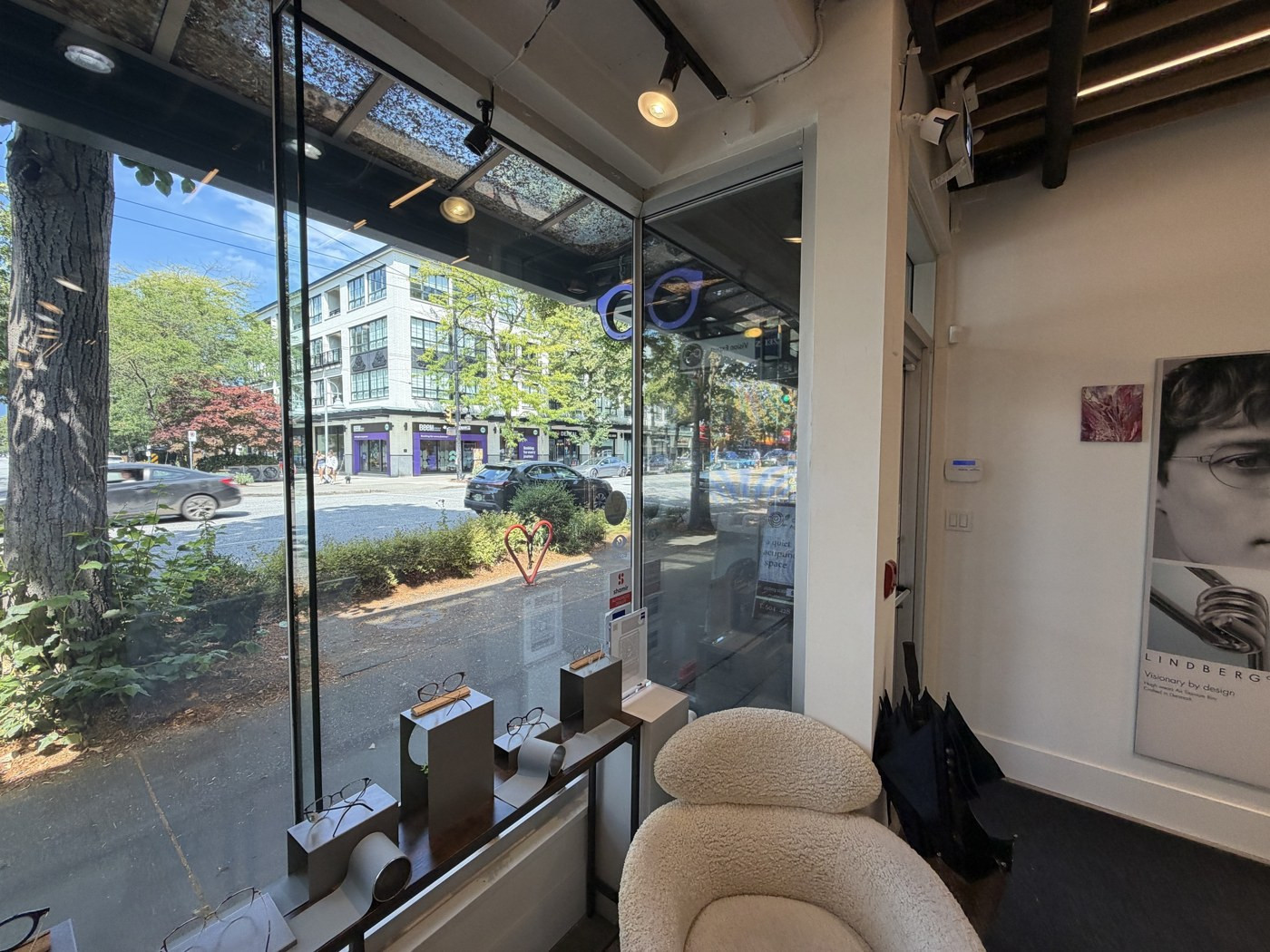
The shop brings together street-facing glazing, daylight and an interior eyewear display. In an optical retail setting, glass is part of how customers encounter the business and its products. Any proposed treatment needs to be discussed in that setting, with attention to the location and the purpose of each surface.
The work covered two areas: the storefront glazing and the glass at the eyewear display. The street-facing glass frames the shop from outside; the display glass does its work inside, where customers look closely at the frames.
For another retailer, the starting point is similarly concrete. Walk through the space and identify which glass you want assessed. A street-facing pane, a door and an internal display may raise different questions. Naming each location helps everyone discuss the same job.
A request for glass protection is a starting point for a conversation, rather than a complete specification. The installer needs to understand the concern, the existing glazing and the proposed application. A useful brief explains where the glass is, what surrounds it and what the owner wants the treatment to address.
For your own shop, describe the concern in ordinary language before choosing a thickness. If the question involves security, discuss how the glass sits within the wider opening and the rest of the premises. Ask which aspects the proposed treatment addresses and which require other measures or specialist advice.
Start with the glass and the way the store uses it. A clear view of each area gives the team something concrete to assess, whether it faces the street, supports a display or sits along a route customers use every day.
The scope at Prestige Optical included both the storefront and eyewear-display glazing. If you are planning a similar project, walk the space with the installer and identify each surface before deciding on a film.
For a new assessment, mark the relevant glazing on a photograph or simple drawing. Use the same labels in the quotation and subsequent correspondence. If the scope changes, ask for a revised record that identifies the change rather than leaving the installer to reconcile several versions on site.
Keep the accepted version where the property contact can find it. It should be clear which locations are included, which option has been selected and who can resolve a question before installation. This is particularly helpful when the person arranging the work is different from the person providing access.
Prestige Optical chose 9 mil security film for its storefront and eyewear-display glazing. The film choice followed a review of the two areas and what the shop needed from each. The storefront faces the street; the display glass serves customers inside the store.
When comparing options for another site, ask the installer to explain the proposed product and application in relation to the actual glazing. Request the relevant product information and ask which claims apply to the proposed installation. The useful comparison is the complete recommendation, including any required installation details, rather than a number considered by itself.
Appearance also deserves a clear conversation in a retail space. If visibility, reflection or the presentation of merchandise matters to your brief, say so before selection. Ask how the proposed film can be assessed in the shop's own lighting conditions. A product specification and a visual review answer different questions, and both may be useful.
For a retail project, assess each area on its own terms. Look at the storefront from the street and walk the display area from the customer side. Use what you see in both places to explain what you want the film to address.
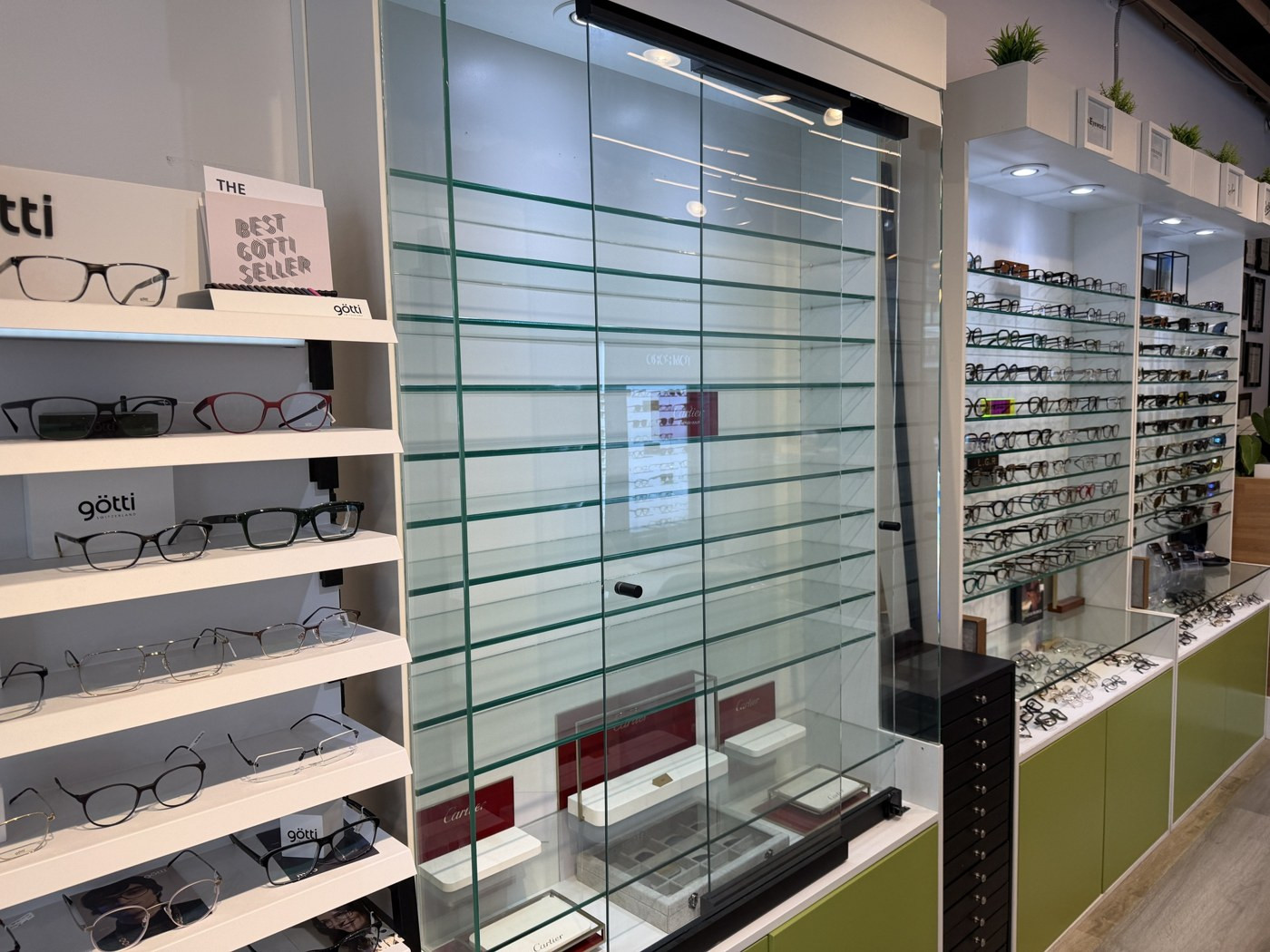
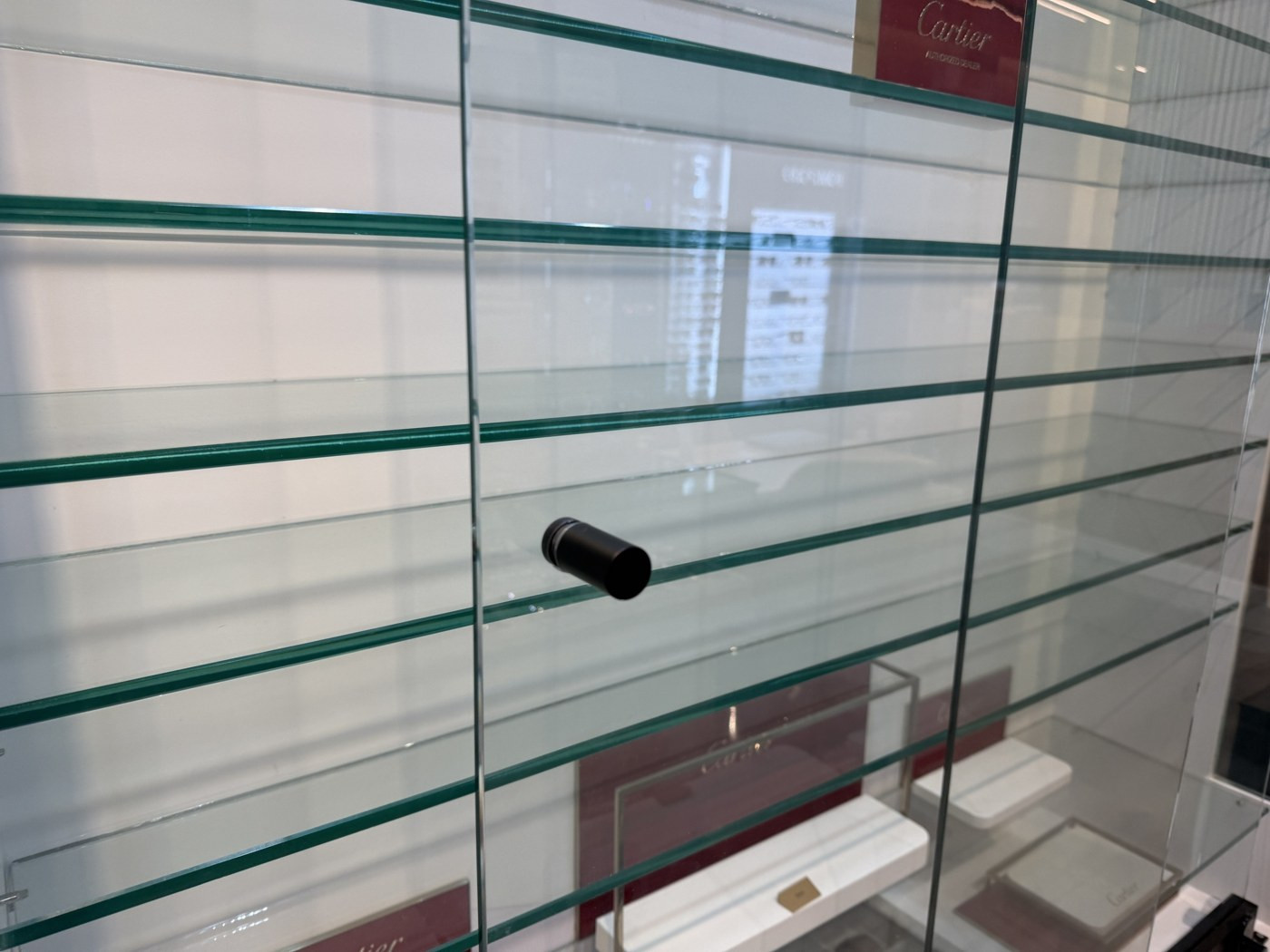
The glasses-shelf area is a distinctive part of this case. The scope extended beyond the storefront to glazing associated with the eyewear display. It is a reminder to describe the retail interior as carefully as the street elevation when arranging an assessment.
For a similar shop, consider what is near the glass and what an installer will need to reach it. Shelves, merchandise and fixtures can affect access. Agree who will prepare the immediate area and how any items will be handled. Do not assume those arrangements are included simply because the glazing appears in a quotation.
After installation, the same location detail will help the people who clean and maintain the shop. A record identifying the display glazing is more useful than a note saying only that the premises has window film. Keep the treatment information connected to the surface it describes.
Ecovision completed the 9 mil film installation on the storefront and eyewear-display glazing at Prestige Optical. Both areas are part of the finished project: the glass people see from the street and the glass they encounter inside the shop.
For a new project, use the handover to check the work against the agreed scope and retain the final product information. Ask which care instructions apply, who should receive them and how to raise a concern. These details should be accessible to the shop team after the quotation conversation has ended.
If several people share responsibility for the premises, decide who will keep the record. It need not be complicated: the accepted scope, product identification, care guidance and installer contact details can sit together. Include any follow-up that has been agreed so it remains visible when responsibilities change.
Plan the handover from the start. The people who clean the glass should know which surfaces were treated and where to find the film’s care instructions. Give them a clear route to ask about a specific pane. That keeps useful advice connected to the actual glass and film.
For another installation, follow the guidance supplied for the actual film. Ask when the surface may be cleaned, which materials are suitable and what to do if its appearance raises a question. An installer can give advice with reference to the product and conditions; a general cleaning tip cannot replace that information.
When contacting the installer, identify the panel and provide a clear photograph. Describe what you have noticed and when you first noticed it. Keep any agreed next step with the project record. Clear communication helps distinguish the question being asked from assumptions about its cause.
A useful film discussion should explain the proposed role of the treatment in terms the shop owner can understand. If the goal relates to security, ask about the relevant product evidence, the glazing and any installation-system requirements. Keep the film decision connected to the wider security discussion for the premises.
Avoid relying on a label such as security film as a complete description of an outcome. Ask the provider what is supported for the proposed configuration, what limitations apply and whether other work needs to be considered. Those questions are more useful than expecting one product choice to answer every risk at a shopfront.
Prestige Optical paired a clearly defined scope with a specific film choice. If you have a particular protection goal, tell your installer what you want the glazing to address and ask which product and installation details are relevant.
Start with the shop address and a short explanation of the concern. Add a wider view of the storefront, a closer view of the relevant glass and photographs of any interior glazing you want included. Label the surfaces so that the conversation can move easily between photographs and the actual space.
Share any available glazing or existing-film information. If you do not have it, identify it as a question for the assessment. Include relevant access arrangements and say who will coordinate the work. If display fixtures or stock are close to the glass, raise that early.
Then ask for an option that responds to the brief, with the product information and proposed scope clearly recorded. Prestige Optical's two-area discussion is a useful model for that clarity: describe the actual locations first, then confirm the treatment that has been selected for them.
Ecovision treated the storefront glazing and the glass at the eyewear display at the original Prestige Optical shop, 2950 W Broadway in Vancouver.
Prestige Optical selected 9 mil security film, and Ecovision completed the installation. For your own shop, start with an assessment of your glazing.
No. Ask about the proposed product, existing glazing, installation details and applicable evidence. A thickness number alone is not a guarantee of a particular result.
Follow the supplied care guidance and contact the installer with the panel location, a clear photograph and a description of the concern. Keep any agreed follow-up with the project record.
Prestige Optical brought its street-facing storefront and interior eyewear display into one security film project. Ecovision installed 9 mil film on the agreed glazing in both areas. Start your own assessment by identifying which glass needs attention.
If you are considering film for a retail space, tell Ecovision what you want to address and which glass is involved. Bring the storefront and the interior into the same conversation so the recommendation can begin with your actual shop.









I had Sean install Reflective window film in my home, and I’m thrilled with the results! It’s made my home more comfortable by reducing heat, blocking UV rays, and adding privacy without sacrificing natural light.
Installation was quick and professional, and I’ve noticed lower energy bills and a sleek look for my windows. Highly recommend!

We recently installed frosted film in our office, and the transformation has been remarkable! The film adds a sleek, modern touch to our workspace while providing much-needed privacy for our meeting rooms and collaborative areas.
Not only does it create a professional atmosphere, but it also allows natural light to flow through, brightening up the entire space without compromising confidentiality. Our team loves the aesthetic appeal it brings.