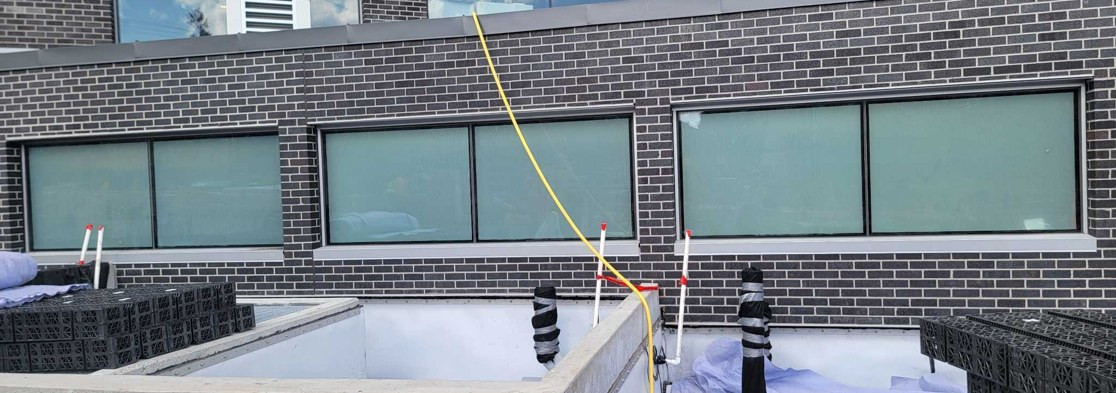
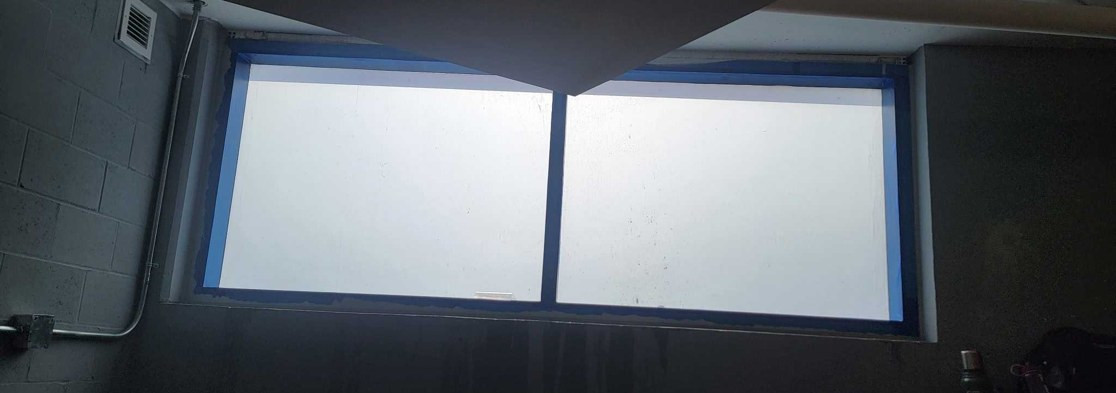
The project team at The Cascades wanted privacy at a group of windows, during the day and in the evening. Ecovision supplied and installed Frost (NRM PS2) film on the selected existing windows. Clear glazing now has a frosted finish at the part of the property included in the project.
The Cascades: the setting
The Cascades is a rental property at 8433 Ash Street in Vancouver, near Marine Drive Canada Line Station, professionally managed by Chard. The window-film work took place within a larger building project. Its purpose was straightforward: address the privacy requirement at the selected glazing.
That is a familiar kind of decision for a property team. A building may be designed with extensive glass, yet a particular area needs more separation from the view outside. The question is not whether windows are useful. It is whether a clear view through these windows suits the way the space is used.
At The Cascades, the enquiry identified privacy film as the treatment to explore. The concern included both daytime and evening conditions, making the intended use of the glass more important than choosing a finish for decoration alone.
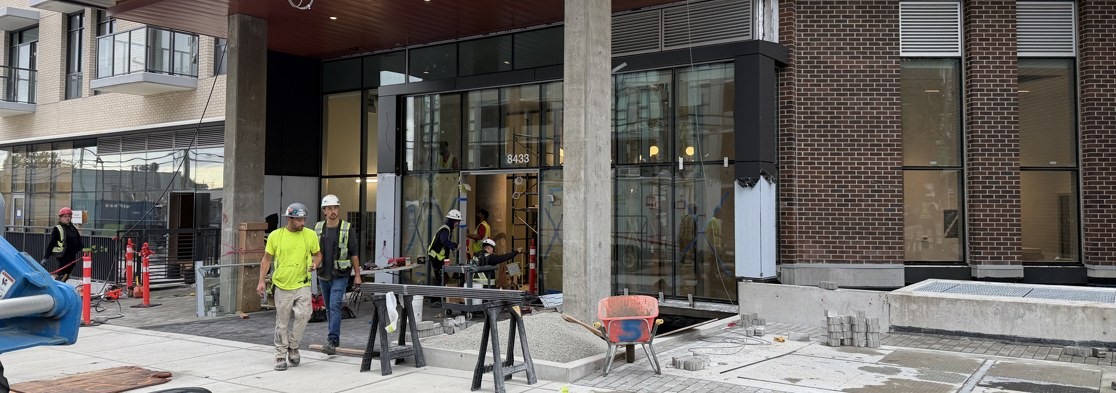
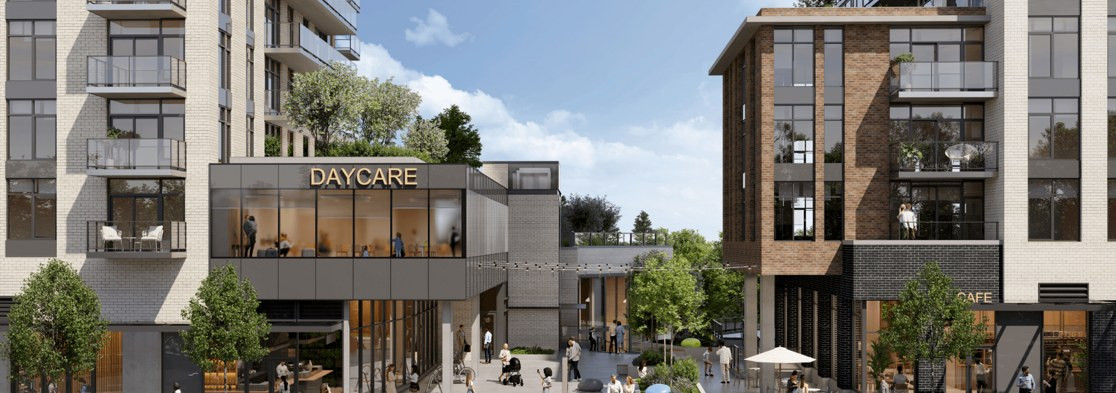
The Cascades entranceThe Cascades / architectural visualization
The challenge: unwanted views through clear glass
A request for privacy can sound simple until the team begins to describe it. The person looking through a window may be standing outside, passing along a walkway or using another part of the building. The concern may be constant, or it may become noticeable only when the interior is lit.
For this project, the enquiry made the day-and-evening requirement explicit. It gave the proposed treatment a practical purpose: change the clear view through the selected panes. The result also needed to be considered as part of the property’s appearance, since the windows are seen from inside and outside.
The completed solution was frosted film. Rather than replace the glass as part of the work, Ecovision applied the specified treatment to the existing windows. This kept the intervention at the panes included in the brief and gave them a visibly different finish.
Before / original glazing
The installation: Frost film on the existing panes
Frost (NRM PS2) was the installed product. Ecovision supplied and installed the film. The work is complete.
The treated panes no longer have the ordinary clear appearance of the original glazing. They have a pale, frosted surface, visible from the exterior and from inside. That change is the centre of this case: a privacy enquiry became an installed treatment on an identified group of windows.
The film sits on the glass rather than adding a separate screen in front of it. The panes remain in their frames, and the finish appears within the existing window openings. Those details make the project relevant to teams considering a change to glazing that is already in place.
The wider property provides the architectural setting, but the intervention stays local. Adjacent spaces can be considered on their own needs. There is no reason to extend one area’s treatment automatically to every window in a building.
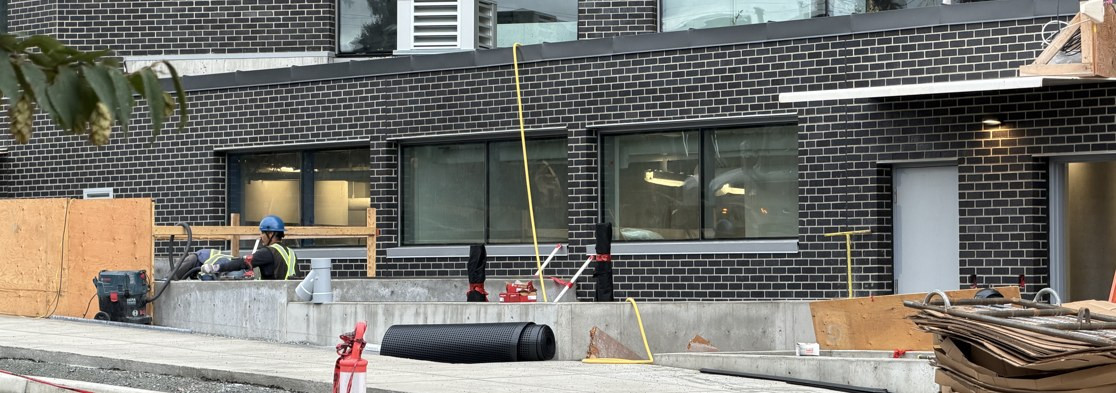
After / frosted privacy finish
The result: a frosted finish where it was needed
The project delivered the specified film installation at the selected windows. The finished panes can be seen within the lower facade and from the room side, giving a direct view of the change to the glass.
For a property team, the value of this type of work is its precision. A privacy concern at one location receives a treatment at that location. The decision does not have to become a larger renovation to have a clear purpose.
The Cascades is therefore a useful project reference, particularly for someone asking whether a surface treatment is worth discussing for existing glazing. It brings the installed finish into a building setting, with the product and extent of the work identified. The next step for another site is to understand its own windows and privacy needs.
Completed finish / interior
Planning a similar project: start with the view
Before comparing finishes for a new project, describe the view you want to change. “We need privacy” is a starting point; identifying where someone can look in is more useful. Point to the window, the direction of the view and the position from which it causes concern.
A simple annotated view of the glazing can help. Mark the panes under consideration and, if useful, the area behind them. This makes it easier for a property manager, coordinator and installer to discuss the same windows, especially when several similar openings sit along a facade.
Be specific about how much of the opening is involved. Does the concern apply across the selected pane, or only at a particular sightline? This is a question for the assessment, not an invitation to assume a partial treatment will be suitable. It helps the team understand the requirement before discussing the proposed finish and extent of work.
Also distinguish between what is happening now and what you would prefer. A description of the current view and a clear statement of the desired change are easier to act on than a product request with no explanation behind it.
Include daytime and evening conditions in the brief
The enquiry for The Cascades raised both day and evening privacy. For anyone preparing a new brief, that is a useful reminder to describe when the concern occurs, not just where.
A view assessed during one visit may not represent every situation that matters to the people using the space. Tell the project team about interior lighting, the normal use of the area and any particular time when unwanted visibility becomes an issue. If the concern has only been noticed under certain conditions, say so.
This gives the team something concrete to review. It also helps separate the required result from an assumption about what a film will do. Discuss the proposed product against the actual conditions and the privacy level being sought before proceeding.
A clear brief does not have to be a lengthy technical document. A few accurate details about the location, the viewing direction and the relevant lighting conditions can make the first conversation much more productive.
Choose the appearance from both sides
The installed film will be visible to people inside the space and to those seeing the building from outside. Consider both views when discussing a finish.
From indoors, think about the window as part of the room. What appearance would suit the walls, frames and other glazing nearby? From outdoors, consider how the proposed treatment will sit beside adjacent panes and the rest of the facade. The same finish may be judged differently in those two settings, so it is worth bringing the relevant people into the discussion.
Where a sample or proposed specification is available, use it to ask practical questions rather than choose from a name alone. Confirm what is being proposed, which panes it applies to and how the team will agree on the intended appearance. Product suitability and any approval requirements should be checked for the actual property.
At The Cascades, the completed work offers one real example of a frosted finish. It can inform the discussion without deciding what another building should use.
Give the assessment useful site information
A new project is easier to discuss when the team has a clear view of the glazing and a description of the concern. Start with the property location and images that show the windows in context, then add a closer view if it helps identify the panes.
Share any available information about the glass, existing films or coatings, and relevant building requirements. If that information is not known, flag the gap rather than guess. The installer can identify what needs to be checked before a product recommendation or installation is confirmed.
It is also useful to identify who will coordinate the work and who needs to review the appearance. A property manager, project coordinator and end user may bring different information. Agreeing on a contact for those questions keeps the proposal easier to follow.
These are preparation steps for a new enquiry, not a list of extra work attributed to The Cascades. Their purpose is to help a building team move from a general concern to a discussion that is specific enough to support a decision.
Keep the handover simple
Once work is complete, keep the product identification and the treated locations together with the care information supplied for the installation. Someone taking over responsibility for the property should be able to find out which glass was treated without relying on the original coordinator’s memory.
Use the care guidance for the installed product rather than assume that all window surfaces are cleaned in the same way. If there is a question about the finish or its care, contact the installer with the location and a clear description of what you are seeing.
The same information is useful if another area is considered later. It gives the team a reference for the existing treatment while leaving the new windows to their own assessment. That is a practical way to use a completed project: learn from it, keep its details accessible and make the next decision on the needs of the next space.
Talk to Ecovision about privacy at your property
The Cascades began with a practical question about visibility through glass and ended with an installed frosted treatment. If you are facing a similar concern, tell us where the view is unwanted and when it matters.
Send the property location, a view of the windows and a short description of the issue. Ecovision can discuss the intended finish, the information needed for an assessment and the work that may be appropriate for your glazing.
Real feedback from clients who’ve experienced the Ecovision difference, greater comfort, energy savings, and lasting value. See how our commitment to precision and service delivers measurable results for every project.
I had Sean install Reflective window film in my home, and I’m thrilled with the results! It’s made my home more comfortable by reducing heat, blocking UV rays, and adding privacy without sacrificing natural light.
Installation was quick and professional, and I’ve noticed lower energy bills and a sleek look for my windows. Highly recommend!
SimonVancouver, BC
We recently installed frosted film in our office, and the transformation has been remarkable! The film adds a sleek, modern touch to our workspace while providing much-needed privacy for our meeting rooms and collaborative areas.
Not only does it create a professional atmosphere, but it also allows natural light to flow through, brightening up the entire space without compromising confidentiality. Our team loves the aesthetic appeal it brings.
MeganVancouver, BC
Ecovision did an excellent job tinting the windows in my house.
The ULVDS40 film makes such a difference in the summer with the heat, and you can’t even tell that there is tint on the windows.
Great work. Thank you Xander & Ecovision team!
RebekahVancouver, BC
Request your free estimate!
You're In! Check Your Email
Thanks for requesting the white paper. Look for an email from Ecovision with your PDF attached.
Please check your inbox and spam folder. The email also includes a link if you prefer to read the PDF online.